
As an Amazon Associate I earn from qualifying purchases.
In the lifeline vs lineman’s belt question, the honest answer is that they do different jobs, and both clip to the same thing: a full-body harness. The harness is the fall-arrest system you wear. A lifeline keeps you connected while you climb to a stand that is already hung. A lineman’s belt holds you against the tree so your hands are free while you hang sticks or a stand.
This guide explains what each piece does, where each one fits in a ladder, hang-on or climber setup, and the order to connect and disconnect so you are never free of the tree. It follows the Treestand Manufacturers Association safety guidelines, the industry group that sets the standards most stands and harnesses are built to.
Lifeline vs lineman’s belt vs harness: the short answer
Think of the harness as the anchor point on your body and the other two as ways to connect it to the tree. The TMA guidelines are blunt about the first part: wear a full-body fall arrest harness every time you leave the ground, including while climbing up and down, and single-strap belts and chest harnesses should no longer be used.
Most falls happen on the way up, on the way down, or while stepping onto the platform. That is why the harness alone is not the whole answer. Its tree tether only protects you once it is attached above the stand, and the lifeline and lineman’s belt exist to cover the minutes before and after.
The same Wisconsin DNR tree stand safety page notes that fewer than half of the state’s deer hunters use a harness every time they climb.
What each one does
Here is how the three compare, with the gear we would pair with each job. The star ratings are our own editorial scores for how well each pick fits its role in this guide.
| Product | Best for | Our rating | |
|---|---|---|---|
 Summit Pro Safety Harness | Best harnessFull-body fit with padded shoulders, worn on every climb and sit | ★★★★½ 4.5/5 | Check price |
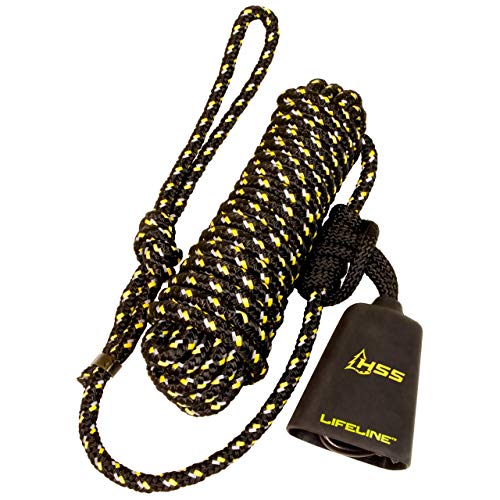 HSS Reflective Lifeline | Best lifelineReflective rope keeps you clipped in from ground to stand | ★★★★½ 4.5/5 | Check price |
 Muddy Lineman's Rope | Best lineman's beltBraided rope with movable prusik for hands-free stand hanging | ★★★★½ 4.5/5 | Check price |
 HSS Quick-Connect Treestrap | Best tree strapsThree straps to leave a tether anchor at each stand | ★★★★☆ 4/5 | Check price |
Full-body harness: the fall-arrest foundation
A full-body harness spreads the force of a fall across your thighs, hips, chest and shoulders. Its tether connects to a tree strap above your head when you are on the platform. The TMA says the tether should have no slack when you sit, so a slip leaves you at the platform instead of below it.
Every harness also needs a suspension relief strap and a plan to recover. Hanging in a harness can become dangerous in less than 20 minutes, according to the Wisconsin DNR. Our best treestand safety harnesses guide compares more options.
Tree stand lifeline: protection for the climb
A lifeline is a rope tied above the stand and staked or tied near the ground, with a sliding prusik knot. You clip your harness tether to the prusik before your boots leave the ground and slide it up as you climb. At the platform you stay clipped in, so there is no unprotected moment.
Lifelines suit ladder stands and hang-ons that stay in one tree. They are less useful for climbers, which move with you. Because they live outdoors, check the rope, knots and carabiner before every hunt.
Lineman’s belt: hands-free positioning
A lineman’s belt, often sold as a lineman’s rope, wraps around the trunk and clips to the side loops on your harness. Kept snug, it lets you lean back with both hands free to set climbing sticks, strap on a hang-on or adjust a platform. Many mobile hunters also use it to stay on the tree while they climb sticks.
It is a positioning tool, not your fall-arrest connection for the hunt. Once you reach the platform, connect your tether to the tree first, then take the lineman’s belt off. Saddle hunters use the same rope; our best hunting saddle setup shows how it fits that system.
The table and picks below follow that same order: harness first, then the connection for your stand type.
Which do you need for your stand?
- Ladder stand: harness plus a lifeline from the ground to above the seat. Clip in at the bottom and stay on the lifeline while seated.
- Hang-on with sticks: harness, a lineman’s belt while you hang the sticks and stand, then a lifeline if the set stays up for the season.
- Climbing stand: harness with the tether looped around the trunk above you as you climb, moving it up with each lift. A lifeline rarely fits this style.
- Saddle: the lineman’s rope and tether are the system; see our beginner hunting saddle setup.
Still picking a stand? Our best tree stands for deer hunting guide covers ladder, hang-on and climbing options, and tree stand placement covers where to hang them.
1. Summit Pro Safety Harness: best full-body harness
Summit Pro Safety Harness
A padded full-body harness for every climb and every sit
Full-body fall-arrest harness with padded shoulder straps and a torso strap for a snug fit over hunting layers; choose your size on the listing.
The Summit Pro Safety Harness is a full-body harness with padded shoulder straps and a torso strap, the kind of fit that makes you more likely to wear it on every sit. The listing we link is the Large size, so pick your size on the listing and try it on over the layers you hunt in.
2. HSS Reflective Lifeline: best lifeline for preset stands
HSS Reflective Lifeline
Stay clipped in from the ground to your stand and back
A lifeline for preset stands with reflective rope that shows in a headlamp beam, plus a carabiner and sound dampeners, so the climb itself is protected.
The HSS Reflective Lifeline stays on the tree and keeps you clipped in from the ground to the platform. Its reflective rope shows up in a headlamp beam, which helps on dark walks in, and it comes with a carabiner and sound dampeners.
The drawback is that one lifeline covers one stand, so a hunter with several sets needs several lines. Follow the maker’s replacement guidance and retire it after a fall or any sign of wear.
3. Muddy Lineman’s Rope: best lineman’s belt
Muddy Lineman's Rope
A movable anchor for hanging stands with both hands free
Braided nylon lineman's rope with a movable prusik knot and a locking carabiner that clips to your harness side loops while you hang sticks or a stand.
The Muddy Lineman's Rope is braided nylon with a movable prusik knot and a locking carabiner, so you can shorten or lengthen it around the trunk as you work. It gives you a moving anchor while you hang a stand or climb sticks to it.
Add a set of tree straps such as the HSS Quick-Connect Treestrap so every stand has a known, inspected anchor for your tether.
How to stay connected from the ground to the stand
The order matters more than any single piece of gear. Practice this at head height in daylight, with someone watching, before you do it in the dark.
A haul line keeps your hands free on the climb. The TMA says never to climb with anything in your hands or on your back. A retractable hoist like the Doyle's Deer Gear Huntin Hoist reels in its own rope, and our tree stand gear hoists guide compares more.

Inspect, replace and plan for a fall
Rope, webbing and stitching wear out. Look for fraying, flattened or stiff webbing, sun-faded fibers, chewing and rusted or sticky carabiner gates before each season and each hunt. The TMA says to destroy any harness after a fall, and to retire parts past the maker’s expiration date.
Carry a phone or other signal device you can reach while hanging, and tell someone where you are hunting. If you could not get yourself back to the platform or the ground after a fall, the TMA advice is to hunt from the ground until you can.
For the full stand and tree inspection, use our tree stand safety checklist, and trim weight from a mobile kit with our mobile hunting setup mods.

Frequently asked questions
Is a lineman's belt the same as a safety harness?
No. A lineman’s belt is a rope or strap that goes around the tree and clips to the side loops of a full-body harness. It holds you in position while you work. The harness and its tether are the fall-arrest system, so you need both, such as the Summit Pro Safety Harness with the Muddy Lineman's Rope.
Do I need a lifeline if I wear a harness?
On a ladder stand or a hang-on that stays in the tree, yes. Your tether only protects you once it is attached above the platform, and many falls happen during the climb. A lifeline like the HSS Reflective Lifeline keeps you connected from the ground up.
Can I use a lineman's belt instead of a lifeline?
Many hunters who climb sticks to a hang-on do, moving the lineman’s belt up as they climb. It takes practice and both hands at each move. On a stand you hunt often, a lifeline is simpler and keeps you clipped in with less fuss.
When should I replace my tree stand harness?
Replace it after any fall, when it passes the maker’s expiration date, or if stitching, webbing or buckles show damage. The Treestand Manufacturers Association says a harness must be destroyed and replaced after a fall.