
Muck Boot FieldBlazer Hunting Boot Review
The Muck FieldBlazer is a practical rubber hunting boot for wet, muddy, short-to-moderate hunts. That sounds simple, but simple is exactly the point. A lot of deer and turkey hunting happens around food plots, farm lanes, creek crossings, pasture edges, and ground blinds where waterproof coverage and fast cleanup matter more than technical mountain-boot features.
This refresh keeps the original FieldBlazer review focused on the boot family instead of pretending every hunter needs a different category of footwear. The recommendation is straightforward: use the FieldBlazer when your hunt is wet, messy, and relatively close; look elsewhere when the day is hot, steep, or high-mileage.
Affiliate disclosure: this section uses Amazon links. If you buy through them, ProHuntingHacks may earn a commission.
Fast recommendations
Best Muck FieldBlazer Options to Consider First
If you are here to make the boot decision quickly, start with these three FieldBlazer variants. The table recap is lower in the article after the individual reviews, so the top of the page does not turn into a spreadsheet before you know what each boot is for.
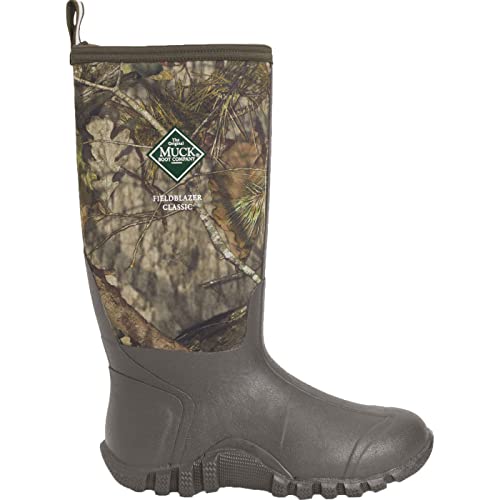
Best match for the original FieldBlazer review
Muck FieldBlazer Classic Tall Boot
Start here if you want the familiar FieldBlazer formula for stand hunting and muddy access routes.
- Tall rubber shaft gives better margin in wet grass, shallow mud, and low creek crossings.
- Simple pull-on build is easy to rinse after chores, food-plot work, or a sloppy morning sit.
- Camo upper makes sense for whitetail stands, blinds, turkey setups, and general hunting use.
- Less precise underfoot than a laced boot if the walk gets long or uneven.
- Rubber can run warm during early season scouting or active turkey hunts.
Amazon affiliate link; no price or availability claims.

Best cooler-weather FieldBlazer
Muck FieldBlazer Classic Fleece Boot
Choose this when your FieldBlazer use leans colder and more stationary.
- Better comfort direction for frosty mornings and slower late-season use.
- Still gives the mud, wet grass, and rinse-clean advantages of a rubber hunting boot.
- Works well as a property-work boot that can also go straight to a stand or blind.
- Too warm for many early-season or high-movement days.
- Bulk and rubber-shell feel are still noticeable compared with lace-up boots.
Amazon affiliate link; no price or availability claims.

Best camo-pattern update
Muck FieldBlazer Bottomland Tall Boot
Pick this if the FieldBlazer platform fits you and the Bottomland-style camo matches your hunting cover.
- Tall waterproof profile protects pant legs in brush, flooded grass, and muddy lanes.
- Bottomland-style camo fits timber, creek-bottom, and darker ground-blind setups.
- Same practical rinse-clean rubber boot logic as the rest of the FieldBlazer family.
- Pattern preference should not override fit and comfort.
- Still not the best choice for steep, rocky, or high-mileage terrain.
Amazon affiliate link; no price or availability claims.
Who the FieldBlazer Is Actually For
The FieldBlazer is for hunters who need a waterproof pull-on boot more than they need lace-up precision. Think whitetail hunters walking through dew-soaked hayfields before daylight, landowners checking cameras after rain, turkey hunters crossing soft field edges, or anyone who wants one boot that can go from barn chores to a blind without a full gear change.
The boot is less convincing for long aggressive hikes. Rubber pull-ons do not lock the heel the way a laced leather or synthetic boot can. If your normal route includes steep side hills, rocky cuts, or several miles of scouting, the FieldBlazer becomes a compromise instead of a shortcut.
Fit, Sock Choice, and Walking Comfort
The biggest buying mistake with rubber boots is judging fit too quickly. A FieldBlazer can feel fine standing in the house and still rub your heel once you cross a muddy field. Try it with the socks you actually hunt in. Heavy socks change volume; thin socks change heel movement. Both matter.
A little extra room can be useful for cold stand sits because it lets you wear warmer socks without squeezing circulation. Too much room is a problem when walking because your foot slides, your heel lifts, and every step gets less efficient. If you are between sizes, prioritize the fit that stays controlled with your hunting socks, not the one that feels easiest to kick off.
Waterproofing, Mud, and Cleanup
This is the FieldBlazer lane. Rubber boots handle wet grass, shallow mud, creek-bank muck, manure, and soft field entrances with less drama than leather boots. You can rinse them off, dry the inside, and move on. That is valuable if you hunt private ground, work around food plots, or use the same boots for chores and scouting.
The tradeoff is breathability. Rubber traps heat and moisture. On warm days, your feet can sweat faster than expected, especially if you are moving. That does not make the FieldBlazer bad; it just means you should use it for wet conditions where rubber earns the penalty.
Where It Works Best in the Field
Whitetail stands and ground blinds
This is the most natural FieldBlazer use case. The boot handles quiet, low-speed access through wet grass, muddy field edges, and rutted lanes. It also keeps pant cuffs cleaner when you are slipping into a ladder stand or box blind before daylight.
Turkey hunting and spring property work
Spring often means soaked grass and soft access roads. The FieldBlazer is useful when the hunt is controlled and relatively close. It is less ideal for run-and-gun turkey days where you cover ground fast, climb, sit, move, and repeat.
Creek bottoms, swamp edges, and wet access
A tall waterproof boot gives more margin around creek crossings, flooded low spots, beaver edges, and muddy timber approaches. The FieldBlazer is not a wader, but it gives you more confidence than a low boot when the route gets unpredictable.
Individual Boot Reviews
Best match for the original FieldBlazer review
Muck FieldBlazer Classic Tall Boot
This is the version I would use as the baseline FieldBlazer recommendation. It is not trying to be a mountain boot or a technical hiker. Its job is simpler: keep your feet protected when the route to the stand runs through wet grass, tractor ruts, pasture edges, and soft mud.
That matters for Midwest whitetail hunting because a lot of real access is not dramatic terrain. It is wet field edges before daylight, frozen-rut lanes that thaw by noon, and the kind of creek-bottom mud that turns a leather boot into a cleanup project. The Classic Tall is built for that unglamorous work.
Fit is the point to watch. A pull-on rubber boot should not feel like a sloppy bucket around your heel. Try it with the socks you actually wear in deer season. If your heel lifts badly or your toes jam on a downhill bank, the convenience stops being worth it.
Buy this one if you want the safest all-around FieldBlazer choice for deer stands, blinds, turkey mornings, and land work. Skip it if your normal hunt starts with several miles of side-hill walking or steep rocky ground.
Bottom line: Best for the hunter who wants one practical rubber boot for wet stand access, muddy chores, and short-to-moderate hunting walks.
Best cooler-weather FieldBlazer
Muck FieldBlazer Classic Fleece Boot
The fleece version only makes sense if you are honest about temperature and movement. If your FieldBlazer use is mostly October chores, short November walks, ladder stands, and cold wet ground, the extra comfort is useful. If you are scouting in September or walking all morning after turkeys, it can become the wrong kind of warm.
I like this version for hunters who treat rubber boots as a sit-and-work boot rather than an all-day hiking boot. Pull it on for a cold pre-dawn walk, sit over a damp food plot, rinse the mud off later, and it earns its keep. That is the lane.
Do not buy it because warmer automatically sounds better. Warm rubber boots can trap sweat, and damp socks are cold socks once you stop moving. Pair it with the right sock weight and use it when the day actually calls for insulation.
Buy this one if you routinely hunt cold wet ground from stands or blinds. Skip it if your FieldBlazer needs to handle warm weather, aggressive walking, or long scouting loops.
Bottom line: Best for cold, slower hunts where waterproof coverage and warmth matter more than ventilation.
Best camo-pattern update
Muck FieldBlazer Bottomland Tall Boot
The Bottomland Tall is not a totally different boot strategy. It is the FieldBlazer concept with a camo presentation that fits darker timber, creek-bottom travel, and hunters who simply prefer that look. That is a valid reason to choose it, but it should come after fit.
This version is strongest when the hunting environment is wet, brushy, and relatively close to the truck, barn, or stand. It gives you tall rubber coverage through swampy edges and muddy access without turning cleanup into a project.
The mistake is treating the camo pattern like performance. Bottomland styling will not make a pull-on rubber boot support your ankle better or breathe better. If the FieldBlazer fit works for your foot and your terrain, then pattern preference can break the tie.
Buy this one if you like the tall FieldBlazer platform and want the Bottomland look for timber or bottomland cover. Skip it if you need the boot to solve hiking-support problems.
Bottom line: Best for hunters who already want a tall rubber FieldBlazer and prefer the Bottomland-style camo presentation.
Buying Guidance: Which FieldBlazer Should You Choose?
Choose the Classic Tall if you want the default recommendation and the closest match to the original FieldBlazer review. Choose the Classic Fleece if your use is colder and more stationary. Choose the Bottomland Tall if the platform already makes sense and you prefer that camo presentation for timber or creek-bottom cover.
I would not overthink the camo pattern before fit. A boot that rubs, overheats, or slips at the heel is the wrong boot even if the pattern looks perfect. Start with terrain and temperature, then refine by camo preference.
Common Mistakes to Avoid
- Buying a rubber boot for mountain-style hunts where ankle support matters more than waterproof cleanup.
- Choosing the warmest version for early season use and then fighting sweat all morning.
- Ignoring calf fit, especially if you tuck pants into tall boots or wear heavier layers.
- Letting camo pattern override fit, terrain, and how far you actually walk.
- Storing rubber boots near high heat or folded under gear, which shortens their life.
Maintenance and Longevity
Rinse mud off after hunts, pull the insoles if the inside is damp, and let the boots dry before storage. A gentle boot dryer can help, but high heat is not your friend. Rubber and adhesives age faster when they are cooked, folded, or left in direct sun unnecessarily.
Before each season, check the heel, flex points, and upper edge for cracks. A small split is easy to miss in the garage and very easy to regret after stepping into a wet ditch. When rubber boots start leaking, retire them to chore duty instead of trusting them on a cold sit.
Comparison recap
Quick Comparison: Muck FieldBlazer Hunting Boot Options
| Product | Best Use | Why It Wins | Amazon |
|---|---|---|---|
| Muck FieldBlazer Classic Tall Boot |
Wet whitetail stands, muddy field edges, food plots, and property chores | The cleanest version of the FieldBlazer idea: tall waterproof rubber, camo coverage, and easy rinse-off cleanup. | View on Amazon |
| Muck FieldBlazer Classic Fleece Boot |
Cold mornings, late-season chores, and stand sits where warmth matters more than breathability | Adds a warmer-feeling lining while keeping the waterproof rubber FieldBlazer platform. | View on Amazon |
| Muck FieldBlazer Bottomland Tall Boot |
Timber, creek bottoms, and hunters who prefer a Bottomland-style look in a tall rubber boot | Keeps the tall FieldBlazer profile while shifting the visual style toward timber and bottomland setups. | View on Amazon |
Final Verdict
The Muck FieldBlazer still makes sense when judged in the right category. It is a waterproof, rinse-clean, pull-on hunting boot for wet access, muddy chores, whitetail stands, turkey setups, and short-to-moderate walks. It is not a technical boot for steep country, hot high-mileage scouting, or long uneven approaches.
If that practical lane matches your hunting, start with the Classic Tall. Move to the Fleece version for colder, slower sits. Pick the Bottomland Tall when the same boot concept fits your terrain and you prefer that camo look.