
The best tree stand lock for public land is a complete cable-locking system that fits closely around the tree, passes through a structural part of the stand, and remains manageable with cold or gloved hands. For most hunters, a weather-resistant double-loop cable offers the best balance of reach, straightforward setup, and portability. Adjustable cables are better when tree diameter or stand geometry varies, while longer cables make sense for large trunks and awkward routing.
No portable lock makes a treestand theft-proof. The practical goal is to remove easy opportunities, force a would-be thief to spend more time and make more noise, and keep the stand from being carried away with basic hand effort. Good placement and disciplined installation matter at least as much as the lock itself.
What Makes a Tree Stand Lock Work on Public Land?
A useful lock must secure the stand to the tree as one system. That means the cable or chain should pass through a structural frame member rather than only around a removable seat, loose platform accessory, or attachment strap. The locking mechanism should then draw the system tight enough that the cable cannot simply be slipped over the stand or repositioned to create leverage.
Fit is the first decision. A cable that barely reaches may force you to use a weak routing path. One that leaves a large hanging loop can be easier to grab, twist, or attack. Estimate the tree circumference at the exact installation height, then account for the distance needed to pass through the stand frame and reach the lock. If you regularly move between different trees, an adjustable design can reduce the amount of exposed slack.
Weather resistance comes next. Public-land stands may experience rain, condensation, dust, bark debris, freezing temperatures, and long periods without attention. A coated cable helps isolate steel from moisture and reduces scraping against the stand and tree. A protected or weather-resistant cylinder is also preferable to an exposed mechanism that can collect grit.
Field rule: Lock the stand through its main frame, keep the cable high and tight, and orient the keyway where you can reach it without climbing into an unsafe position.
Finally, consider retrieval. A lock that is secure but difficult to operate at dusk can encourage rushed handling. Check whether the cable naturally coils, whether the mechanism can be positioned away from the bark, and whether your key system remains simple when you manage several stands.
How the Ranked Locks Were Evaluated
The rankings prioritize complete systems that include both the locking mechanism and the cable needed to secure a treestand to a tree. Standalone padlocks, replacement cables, non-locking straps, and unrelated security accessories were excluded because they do not solve the full task without additional components.
The strongest all-around option earned the first position by combining sufficient routing flexibility, outdoor-oriented construction, and uncomplicated operation. The remaining positions address specific needs: cinching closely around varied trees, reaching around larger trunks, and managing locks across several stands without carrying a different key for each one.
- Compatibility: The cable must route around the intended tree and through a structural section of the stand.
- Slack control: A tighter installation reduces movement, rattling, and easy access to the cable.
- Outdoor construction: Coatings, weather-resistant lock components, and protected cable surfaces improve suitability for exposed setups.
- Handling: The mechanism should be practical to lock and retrieve without awkward manipulation near an elevated platform.
- Key management: Hunters securing several stands may benefit from keyed-alike locks, provided spare keys are stored separately.
The four selections below serve distinct setups rather than filling space with marginal alternatives.

HME HME-CBLK Cable Lock
A balanced double-loop system with outdoor-oriented construction and practical reach for straightforward treestand security.

Master Lock 8419KA-2 Python Cable Locks
The adjustable mechanism is the strongest fit for hunters who need to control slack across changing tree and stand configurations.
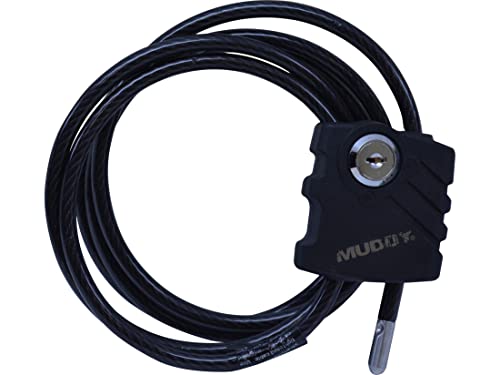
Muddy MUD-MA3531 Defender Lock
A longer coated cable makes this the practical choice for broad trunks and stand frames that require less direct routing.

HME TCL-3 Tree Stand Cable Locks
This keyed-alike package offers the clearest operational advantage for hunters responsible for several permitted stand locations.
Match Cable Configuration to the Tree and Stand
Cable length only helps when the routing is sound. The most direct path usually runs around the tree and through a welded or otherwise integral frame opening. Avoid routing solely through a seat cushion, footrest accessory, gear hook, pull rope, or removable bracket. If a component can be detached while leaving the lock intact, it is not a useful anchor point.
A 6.5-foot double-loop cable is a practical general-purpose configuration. The loops allow the cable to be arranged around the stand and tree without relying on a separate padlock. Its 0.315-inch diameter also keeps the system portable while providing a visible theft deterrent. This style is appropriate when you want a straightforward lock for one stand and do not need a cable that cinches continuously along its length.
An adjustable cable is the better fit when you move a stand among trees with meaningfully different circumferences. The ranked adjustable option uses a 5/16-inch braided-steel cable and holds at positions from 1 to 6 feet. Drawing the cable close to the tree limits the loose loop that might otherwise slap against the stand, snag brush, or provide room for leverage. It is particularly useful when the same lock may serve a treestand, trail camera, or other field equipment at different times.
The long-reach configuration uses a 7-foot rubber-coated 5/16-inch steel cable. That extra routing room is valuable on a broad trunk, around a tree with irregular bark, or when the stand frame forces the lock away from the shortest path. Do not treat extra length as permission to leave a large loop. Use the reach to find a stronger route, then remove as much slack as the design allows.
For several stand locations, a package of three self-contained locks with 6-foot coiled cables simplifies deployment. All three locks are keyed alike, and two keys are included. The obvious benefit is reduced key sorting. The corresponding risk is concentration: losing control of one key affects every lock in that keyed-alike group. Keep the spare somewhere separate from your hunting pack and do not label it with an exact stand location.

Public-Land Rules Come Before Hardware
Confirm the rules for the exact property before leaving any treestand, climbing system, lock, cable, or identification marker in the field. Regulations can differ among federal lands, state wildlife areas, county forests, and locally managed parcels. They may also vary by season, management unit, or stand type. Some properties prohibit unattended stands; others specify removal dates, identification requirements, allowed attachment methods, or restrictions intended to prevent tree damage.
A lock does not create permission to leave equipment. It also does not reserve a hunting location unless the governing rules explicitly say otherwise. Other hunters may still use the area, and customary courtesy is not the same as a legal claim to a tree. Plan your setup so another person can see and avoid the equipment, especially near shared access routes.
Important: Never drive prohibited fasteners into a tree, cut bark to conceal a cable, or leave equipment beyond the land manager’s removal deadline. Use only legal stand and attachment methods for that property.
Write down the stand location, installation date, required removal date, lock model, and key identifier before walking out. A saved map pin is useful, but include a landmark-based description as a backup. Dense foliage, snow, or a changed access route can make a familiar tree surprisingly difficult to relocate.
How to Install a Cable Lock Quietly and Securely
- Inspect the tree and stand first. Do not let a lock distract from structural safety. Check the tree for dead sections, unstable lean, loose bark, overhead hazards, and other conditions that make it unsuitable. Inspect the stand according to its manufacturer’s instructions before installation.
- Choose a structural routing point. Find a frame opening or member that cannot be removed without substantial disassembly. Keep the cable away from sharp unfinished edges that could cut the coating over time.
- Dry-fit the cable at ground level when possible. Learn which end passes through the frame, where the lock body naturally rests, and how the key turns. Ground practice is quieter and safer than solving the mechanism while elevated.
- Position the stand using its approved attachment system. The security cable is not a substitute for the straps, chains, brackets, or other components required to install and support the stand. It is an anti-theft layer, not a load-bearing fall-protection device.
- Route the cable around the tree and through the frame. Favor the shortest strong path. Keep the cable clear of moving platform parts, climbing aids, seat hinges, and any location where it could interfere with entry or descent.
- Remove avoidable slack. Cinch an adjustable system closely or choose the most suitable loop arrangement. The cable should not hang where it can rattle, catch clothing, or provide an obvious handhold.
- Orient the lock for drainage and access. Avoid pressing the lock body into a pocket of bark where water and debris collect. Make sure you can insert and turn the key from a stable position.
- Test the completed installation. Pull on each section of cable, confirm the lock is fully engaged, and verify that no removable stand part can release the secured frame from the tree.
Quiet-setup tip: Wrap or restrain loose cable before the walk in, keep keys on a silent keeper, and complete a practice lock-and-unlock cycle at home while wearing the gloves you expect to use.
Durability and Maintenance That Matter in the Field
Inspect the entire cable rather than judging it by the lock body alone. Look for crushed sections, flat spots, broken wire beneath damaged coating, deep abrasions, severe kinks, and corrosion emerging at the ends. Pay particular attention to places where the cable crosses a metal stand edge or bends tightly into a loop.
Check the coating for splits that could retain moisture or expose steel. Cosmetic scuffing is different from a cut that reaches the cable. If the damage makes the cable’s condition uncertain, replace the system rather than hiding the weak point against the tree.
Operate the cylinder before every installation trip. The key should insert fully, turn without excessive force, and release cleanly. Never assume that a lock working in a dry garage will behave identically after extended exposure. Follow the lock manufacturer’s maintenance guidance, because an unsuitable lubricant can attract grit or perform poorly in cold conditions.
Key condition deserves attention as well. A bent or badly worn key can leave you unable to retrieve the stand. Carry the field key in a secure location separate from loose metal items, and store the spare away from the primary hunting kit. For keyed-alike systems, use a simple code that identifies the key group without advertising the corresponding location.
Tree growth is another reason to revisit a stationary setup. Do not allow the cable to become embedded, constrict the trunk, or place increasing pressure on the stand. Periodic inspection also catches shifted platforms, loosened attachment components, storm damage, and animal interference. The security system should remain snug without becoming part of the tree.
Use This Evaluation Checklist Before Leaving a Stand
- The property permits the stand, lock, and planned installation period.
- The stand is attached with its approved support system, independent of the security cable.
- The cable passes through a structural frame member rather than a removable accessory.
- The chosen route fits without forcing the lock against a sharp edge.
- Excess cable is minimized and cannot rattle against the platform.
- The lock closes fully, and a firm pull does not release either loop or cable end.
- The keyway is reachable from a stable position and does not trap visible water or debris.
- The cable does not obstruct climbing, seating, shooting positions, or emergency descent.
- The tree and stand show no condition that makes the setup unsafe.
- The location and required removal date are recorded.
- The spare key is stored separately from the field key.
- No equipment, wrapping, or concealment method violates land-management rules.
Run the checklist again when moving a lock to another tree. A route that worked on a straight trunk may be unsuitable around a fork, heavy bark ridge, offset stand frame, or larger circumference. Familiar equipment still requires a fresh fit assessment.
Common Tree Stand Lock Buying Mistakes
Choosing length without measuring the route. Tree diameter alone does not determine cable requirements. The path through the stand frame consumes reach, as do irregular bark and an offset locking position. Use a cord or flexible tape to mock up the complete route before selecting a cable.
Assuming thicker-looking coating means stronger cable. A substantial vinyl or rubber jacket can protect surfaces and reduce noise, but the underlying cable construction is the security element. Evaluate the documented cable specification and locking mechanism rather than judging by exterior bulk.
Leaving unnecessary slack. A generous loop may make installation easy, but it also creates movement and leverage. Choose an adjustable system when a close fit is important, or develop a double-loop route that uses available length effectively.
Using the security cable as stand support. These locks are intended to deter removal. They do not replace the stand manufacturer’s attachment system and should not be treated as a safety tether, lifeline, climbing aid, or load-bearing component.
Locking a removable part. A cable through an accessory can look convincing while leaving the main stand frame free. Before locking, imagine which bolts, pins, or detachable parts could be removed while the cable remains untouched.
Ignoring retrieval conditions. A small keyway placed behind the tree may be manageable during a bright preseason setup and miserable during a cold, dark removal. Plan for gloved access, low light, wet bark, and a stable working position.
Relying on camouflage alone. Concealment can reduce casual discovery, but excessive brush placement may create noise, interfere with the stand, violate habitat rules, or make the equipment hazardous to others. A lower-traffic tree and a tight visible deterrent are more dependable than improvised concealment.
Forgetting the administrative side. Failure to record a removal deadline, key group, or location can turn a minor equipment decision into a preventable problem. Treat stand records as part of the security system.
Build Security in Layers
A cable lock works best as one layer in a broader plan. Select a legal site away from the most obvious access line, avoid advertising the setup with reflective material visible from a road, and carry removable accessories out when practical. Steps, seats, cushions, pull ropes, and other detachable components may be easier to remove than the stand itself.
Photograph the equipment and record identifying marks before deployment. Keep those records private and separate from public hunting posts. If local rules allow identification on unattended equipment, follow the required format without adding unnecessary personal information.
Schedule inspections around storms, prolonged wet weather, and major changes in temperature. A lock cannot compensate for a shifted stand, damaged tree, or deteriorated support component. Security and safety inspections can share the same visit, but they remain separate decisions: a stand can be securely locked and still be unsafe to hunt from.
Fast takeaway: Use the shortest strong routing path, secure an integral frame member, control slack, protect your keys, and remove the stand on schedule. The lock deters theft; careful installation keeps the system practical.
Which Lock Configuration Should You Choose?
Choose the double-loop all-around option when you want a purpose-suited treestand lock with uncomplicated routing, weather-resistant construction, and enough flexibility for typical field setups. It is the sensible starting point for a hunter securing one stand and seeking a balanced design rather than a specialized cable mechanism.
Choose the adjustable-fit option when tree size and stand geometry change regularly or when loose cable is your main concern. Its ability to hold along the cable makes it easier to cinch the installation closely. It is also the logical route for hunters who want keyed-alike locks across a pair of security applications.
Choose the long-reach option when the tree or structural routing path consumes more cable. The 7-foot cable provides room for broader trunks and less direct routes, while the compact housing helps keep the lock from dominating the installation. Measure first; reach is useful only when it supports a strong, low-slack path.
Choose the multi-stand package when you maintain several legal stand locations and want to reduce key confusion. Three keyed-alike locks can simplify preseason deployment and later retrieval, but that convenience makes spare-key discipline more important.
If regulations prohibit leaving a stand, none of these is the right answer. Use a mobile setup that leaves with you after each hunt. The best tree stand lock for public land is ultimately the one that fits the complete route, remains operable in field conditions, and supports a legal removal plan without being mistaken for safety equipment.
Compare the recommended options
| Product | Best use | Why it stands out | Best fit | Amazon |
|---|---|---|---|---|
|
#1 HME HME-CBLK Cable LockBest overall |
General-purpose security for a treestand left on a permitted public-land site. | A balanced double-loop system with outdoor-oriented construction and practical reach for straightforward treestand security. | Hunters who want a simple, purpose-suited cable lock for one primary treestand setup. | View on Amazon |
|
#2 Master Lock 8419KA-2 Python Cable LocksBest adjustable fit |
Cinching a cable closely around trees and equipment with varied routing requirements. | The adjustable mechanism is the strongest fit for hunters who need to control slack across changing tree and stand configurations. | Mobile hunters and multi-use gear owners who value close adjustment more than maximum cable reach. | View on Amazon |
|
#3 Muddy MUD-MA3531 Defender LockBest long reach |
Securing a stand around a larger tree or through an awkward structural path. | A longer coated cable makes this the practical choice for broad trunks and stand frames that require less direct routing. | Hunters who have measured a demanding route and need more cable than shorter configurations provide. | View on Amazon |
|
#4 HME TCL-3 Tree Stand Cable LocksBest multi stand pack |
Managing security across several treestands while limiting the number of distinct keys. | This keyed-alike package offers the clearest operational advantage for hunters responsible for several permitted stand locations. | Hunters maintaining several legal stand sites who prioritize simple key management. | View on Amazon |
As an Amazon Associate, ProHuntingHacks may earn from qualifying purchases.