
As an Amazon Associate I earn from qualifying purchases.
The best shooting sticks for hunting are the ones that match your shooting position before the animal shows up. A tall monopod can be perfect on a field edge and frustrating in a turkey blind. A seated bipod can steady a young hunter and still be too slow for a standing coyote.
This guide matches monopods, bipods, a trigger stick and a clamp tripod to deer, turkey, predator and youth setups. The goal isn’t one rest for every hunter. It’s the least movement, enough steadiness and the right height for the way you actually hunt.
| Product | Best for | Our rating | |
|---|---|---|---|
 Allen Company Monopod | Simple field monopod22-61 inch monopod at about 2 lb that doubles as a trekking pole | ★★★★½ 4.5/5 | Check price |
 CVLIFE Monopod with Base | Most adjustable monopodTilting tripod base and 20.5-66.1 inch range for mixed ground | ★★★★☆ 4/5 | Check price |
 BOG Deadshot Sitting Bipod | Seated blindsTwo-leg 25-39 inch rest for chairs and kneeling shots | ★★★★½ 4.5/5 | Check price |
 Jalarox Shooting Stick | Lightweight backupAbout 1.2 lb with a locking 360-degree V yoke and carry bag | ★★★★☆ 4/5 | Check price |
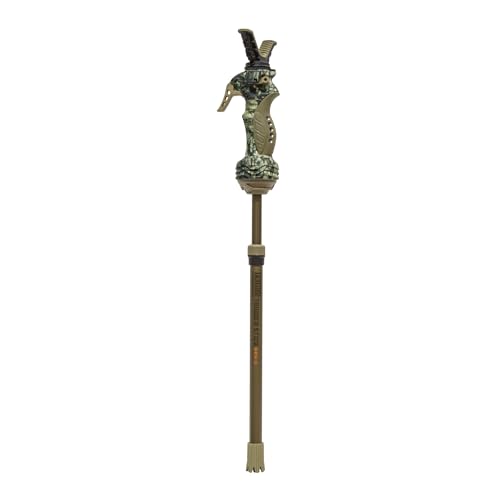 Primos Trigger Stick Gen3 Short | Quick-height seated stickOne-hand trigger height change across a 21-30 inch seated range | ★★★★☆ 4/5 | Check price |
 Vanguard Scout B62C | Kneeling or standing bipodCarbon legs at about 1.1 lb with a 26.6-62 inch range | ★★★★½ 4.5/5 | Check price |
 BOG DeathGrip Aluminum Tripod | Predator and fixed lanesClamp head holds the gun hands-free, 7-59 inch range | ★★★★½ 4.5/5 | Check price |
We ranked these rests from the makers’ specs and listings against the setups in this guide; we did not field test all seven for this update. The star ratings are our own editorial scores for how well each rest fits the job we give it.
How we picked
Every pick had to cover a real shooting position, not just a spec sheet. We gave each one a role and weighed:
Then we checked each against the five rest types in the buying guide below, so every common setup has a match.
1. Allen Company Monopod: best simple field monopod
Allen Company Monopod
A light, fast monopod that goes from walking stick to rest in seconds
An aluminum monopod that adjusts from 22 to 61 inches for kneeling and standing shots, with a removable rubber V cradle, padded grip and wrist strap, at about 2 pounds.
The Allen Company Monopod is the easy starting point. It adjusts from 22 to 61 inches, weighs about 2 pounds and deploys with a rapid-lock system, so it rides along as a walking stick and becomes a rest in seconds. The removable rubber V cradle also turns it into a camera stand.
It suits still-hunters, field-edge deer hunters and new hunters who need something simple. The catch is physics: one leg steadies up-and-down wobble but not side-to-side sway, so your body still does part of the work.
2. CVLIFE Monopod with Tripod Base: most adjustable monopod
CVLIFE Monopod with Tripod Base
A monopod with a tilting tripod foot for mixed ground and swings
An aluminum shooting stick with a ball-joint tri-stand base, rubber feet and a metal spike, a detachable rubber V yoke and a 20.5 to 66.1 inch height range.
The CVLIFE Monopod Shooting Stick adds a small tripod foot with a ball joint, so the pole can tilt and turn without lifting it. Height runs from 20.5 to 66.1 inches, and you can swap between rubber feet, a metal spike and the tri-stand base for flat ground, mud or grass.
That makes it a flexible stick for hunters who move between ground blinds, field edges and range practice. Practice working each lock quietly first: height changes shouldn’t become the loudest move in your setup. The base also adds parts to keep track of.
Pick it over the Allen Company Monopod if you shoot from soft or uneven ground and want the stick to stand on its own between shots.
3. BOG Deadshot Compact Sitting Bipod: best for seated blinds
BOG Deadshot Compact Sitting Bipod
A compact two-leg rest built for chair and kneeling shots
A folding aluminum bipod with cable-style rigid-locking legs, a rubber shooting yoke and rubber feet, adjustable from 25 to 39 inches and weighing under 2 pounds.
The BOG Deadshot Compact Sitting Bipod is built for the low end: 25 to 39 inches, for kneeling and sitting shots, at under 2 pounds. Cable-style legs lock rigid fast, and the rubber yoke keeps the fore-end from sliding.
Two legs add the side-to-side support a monopod lacks, which is why it’s a strong fit for turkey blinds, box blinds, seated predator sets and youth hunters. It can’t reach a standing shot, and both feet have to be planted before game is in range.
4. Jalarox Shooting Stick: best lightweight backup
Jalarox Shooting Stick
An ultralight backup rest that packs away until you need it
A four-section aluminum monopod with lever locks, a locking 360-degree V yoke, a flip spike or rubber foot and a carry bag, adjustable from about 21 to 65 inches.
The Jalarox Shooting Stick weighs about 1.2 pounds and packs into a carry bag, so it’s easy to strap to a pack for the hunt where you don’t expect to need a rest. Four lever locks set the height from about 21 to 65 inches, and the 360-degree V yoke has a locking screw.
A flip foot switches between a metal spike for soft ground and a rubber pad for rock or blind floors. Very light sticks need good body position, though; don’t expect tripod-level steadiness in wind.
5. Primos Trigger Stick Gen3 Short: best quick-height seated stick
Primos Trigger Stick Gen3 Short
One-hand height changes for seated shots in blinds and turkey setups
A short trigger-style monopod that adjusts from 21 to 30 inches with one squeeze, with extreme leg angles, a no-slip grip and a quick-detach yoke that also takes optics.
The Primos Trigger Stick Gen3 short monopod changes height with one hand: squeeze the trigger, set the height, let go. Its 21 to 30 inch range is meant for sitting shots, so it fits a ground blind chair, a seated deer hunt or a turkey setup where the bird shows up at a different angle than you planned.
The quick-detach yoke also takes optics or a camera. Test the trigger, leg movement and yoke rotation at home so the speed stays quiet. It won’t reach a kneeling or standing shot.
Among the best shooting sticks for hunting from a chair, this is the fastest to adjust once you’re settled.
6. Vanguard Scout B62C: best kneeling or standing bipod
Vanguard Scout B62C
A carbon bipod that covers kneeling to standing at about a pound
A carbon fiber shooting bipod with quick-flip leg locks, rubber feet, a rubber-finned 360-degree V yoke and a leg strap, adjustable from 26.6 to 62 inches.
The Vanguard Scout B62C replaces the aluminum Scout B62 we listed before, which is now out of stock. It keeps the same idea, a folding bipod with a 360-degree V yoke, but with carbon fiber legs at about 1.1 pounds and a 26.6 to 62 inch range.
Quick-flip leg locks deploy it quietly, and a leg strap keeps it tidy on the walk. It’s the middle ground between monopod speed and tripod steadiness for predator callers, field-edge deer hunters and turkey hunters. Check its 26.6 inch minimum against your chair: it can sit too tall in a low blind.
7. BOG DeathGrip Aluminum Tripod: best tripod for predator and fixed lanes
BOG DeathGrip Aluminum Tripod
A clamp tripod that holds the gun steady and hands-free on stand
An aluminum tripod with a clamping head and non-marring inserts, 360-degree pan and 25-degree tilt, three leg-angle locks and a 7 to 59 inch range from prone to standing.
The BOG DeathGrip Aluminum Tripod is the steadiest rest in this list. Its clamping head grips the stock with non-marring rubber inserts, so the gun stays supported hands-free while you call or wait. It pans 360 degrees and tilts 25 degrees.
Height runs from 7 to 59 inches, with leg-angle locks at three positions for prone to standing shots. It’s the pick for predator calling stands, open-country deer and box blinds with known lanes. The tradeoff is bulk and weight: it’s a truck-to-stand rest, not one to carry on a long run-and-gun hunt.
Buying guide: choose the rest by shooting position
Choosing among the best shooting sticks for hunting starts with one fact: every stick solves one problem and creates another. One leg is fast; two legs add side support; three legs are steadiest but slowest. Start with the position you shoot from most, then pick the type:
| Rest type | Best hunting fit | Main tradeoff |
|---|---|---|
| Monopod | Still-hunting, standing shots, field edges, youth practice | Fast and packable, but less steady side to side |
| Seated bipod | Turkey blinds, ground blinds, kneeling deer sets | Steadier than one leg, slower to move |
| Tripod | Predator calling, open-country deer, fixed shooting lanes | Steadiest, but bulkier and easier to bump in brush |
| Trigger stick | Quick height changes between sitting, kneeling and standing | Moving parts must be tested for noise |
| Blind clamp or window rest | Box blinds, youth deer setups, known food-plot lanes | Locked to one lane when game shows up elsewhere |
Height decides whether a rest works at all. Standing field-edge hunters need a stick that reaches the shoulder without a crouch. Seated blind hunters need the low end to match their chair and window.
Deer hunting: mobile or seated?
A hunter still-hunting through timber needs speed and silence. A tall monopod or quick trigger stick doubles as a walking aid and becomes a rest without much setup. It isn’t as steady as a tripod, but it’s in your hand when a buck steps into a lane for a few seconds.
Ground blind and box blind hunters can put steadiness first. If the chair, window and lane are known, a seated bipod, tripod or clamp rest cuts movement when deer are close. Set the chair, rest and window together; our ground blind chair setup guide walks through it.
Youth deer setups deserve special care. A low bipod, clamp or tripod can hold the muzzle safely in the lane while the mentor coaches. The rest never replaces muzzle discipline, but it removes the wobble that makes a short shot feel hard. Our first deer hunt checklist covers the rest of the kit.
Turkey hunting: low, quiet and chair-friendly
Turkey hunting punishes extra movement. A gobbler can appear through the wrong window or circle to the decoys while you shift a rest. In a roomy hub blind, a seated bipod or short trigger stick is usually easiest: it rides beside the chair and comes up with the shotgun without scraping the floor.

For run-and-gun turkey hunting, keep it simple. A tall tripod is too much hardware when you’re moving on gobbles. If a rest takes longer to deploy than the bird takes to close, leave it at the truck.
Pair the rest with the right seat: our ground blind chair and ground blind roundups cover chairs and blinds with room for a rest.
Predator hunting: tripod stability vs calling mobility
Predator hunters have the strongest case for a tripod. Coyotes and foxes may hang up at distance or circle to the downwind side, so a tripod with a smooth pan keeps the rifle supported through the whole call sequence instead of lifting it off your lap when the animal appears.

The tradeoff is carry weight. If you make many short stands from a truck, a tripod is easy to justify. If you hike ridges and creek crossings, a bipod or trigger stick is the better compromise. Our electronic vs mouth predator calls guide and summer coyote tactics cover the calling side.
Test seated height from the stool or cushion you use on stands, with your coat on. Snow depth, slope and layers all change the angle; see our cold-weather layering system for the clothes.
Blind clamps and window rests
Blind clamps aren’t as versatile as sticks, but they’re the cleanest solution for a fixed blind. The support ties to the window rail, so there are no legs on the floor. That helps youth hunters and box blinds where the likely shot direction is known.
The limit is field of fire. If deer can appear in four windows, clamping to one lane costs movement later. Keep a backup stick nearby for side windows. Our shooting rests for hunting blinds guide compares window rests in detail.
Setup details that matter more than brand
- Quiet locks: twist, lever and trigger locks should move without clicks or metallic snaps.
- Yoke shape: a rubber V should hold the fore-end without trapping the gun during recoil.
- Feet: narrow feet sink in mud and snow; wider feet help but take more room.
- Carry length: a rest that catches on brush gets left behind on mobile hunts.
- Glove control: every adjustment should work with cold-weather gloves on.
- Youth safety: the rest supports the gun, but an adult still controls muzzle direction.
The National Hunter Safety Course notes that the safest and most accurate field shots come from a rest, and warns against resting the barrel directly on a hard surface, which makes a rifle shoot high. A padded yoke under the fore-end avoids both problems.
Common shooting stick mistakes
- Too much rest for a mobile hunt: a tripod that never leaves the truck is worse than a light stick you carry.
- Ignoring the shot position: standing, kneeling, a turkey chair and a box blind all need different heights.
- Testing only on flat floors: leaves, mud, roots and snow change how the legs behave.
- Setting up too close to the window: backing off hides movement and gives the rest room to pivot.
- Skipping the silent sequence: practice plant, adjust, shoulder, aim and reset before game is in front of you.
A shooting stick isn’t a bench rest. For zeroing a rifle before the season, use a shooting rest for sighting in, and if you want a rest that lives on the rifle, see our bipods for deer rifles.
Frequently asked questions
What are the best shooting sticks for hunting?
The best shooting sticks for hunting are adjustable, quiet and matched to your shooting position. For mobile standing shots, a monopod like the Allen Company Monopod is fast. For seated blinds, a bipod like the BOG Deadshot Compact Sitting Bipod is steadier. For predator stands or fixed lanes, a tripod like the BOG DeathGrip Aluminum Tripod is steadiest.
Are monopods or bipods better for deer hunting?
A monopod is better for mobile deer hunting because it’s faster to plant and easier to carry. A bipod is better from a ground blind, box blind or seated position because the second leg adds side-to-side steadiness. Many hunters own one of each and pick by the stand.
Do I need a tripod for predator hunting?
Not for every hunt, but a tripod helps when you call from one spot and need to hold the rifle ready for several minutes. A clamp tripod like the BOG DeathGrip Aluminum Tripod holds it hands-free. A bipod such as the Vanguard Scout B62C is lighter for long hikes or tight cover.
What shooting rest is best for youth hunters?
A seated bipod, low tripod or blind clamp usually works best, because it supports the gun before the animal arrives. Test the setup with the actual chair, window and unloaded firearm, under adult supervision, before the hunt.
Can I use shooting sticks inside a ground blind?
Yes, if the rest fits the chair and window height. Short sticks like the Primos Trigger Stick Gen3 and seated bipods usually work better than tall standing sticks inside a blind, where there’s little headroom.