
As an Amazon Associate I earn from qualifying purchases.
The best scent control bag for hunting clothes is more than a bag. It’s the clean handoff point between your washer, your garage, your truck and the first hour on stand, keeping washed layers away from fuel, food, pets, damp boots, camp smoke and truck-cab smells.
Scent-control storage works best as a funnel: wash, dry fully, pack clean layers into a dedicated bag or gasketed tote, give boots their own lane, add passive odor support where it helps, and use ozone only as a contained step. The mistake is asking one product to handle the whole chain. Our scent control for deer hunting guide covers the access and wind side of it.
| Product | Best for | Our rating | |
|---|---|---|---|
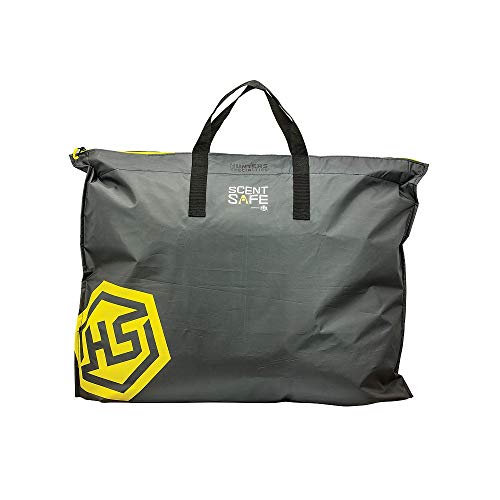 Scent-A-Way Scent-Safe Deluxe Travel Bag | Best overall bagFoil-lined travel bag with double zipper and mesh pockets | ★★★★½ 4.5/5 | Check price |
 Scent Crusher Ozone Roller Bag 2.0 | Best ozone bagRolling ozone bag keeps treatment inside, not in the truck | ★★★★☆ 4/5 | Check price |
 Scent Crusher Locker 2.0 | Ozone storage upgradeTall locker with metal shelves to hang or stack gear | ★★★★☆ 4/5 | Check price |
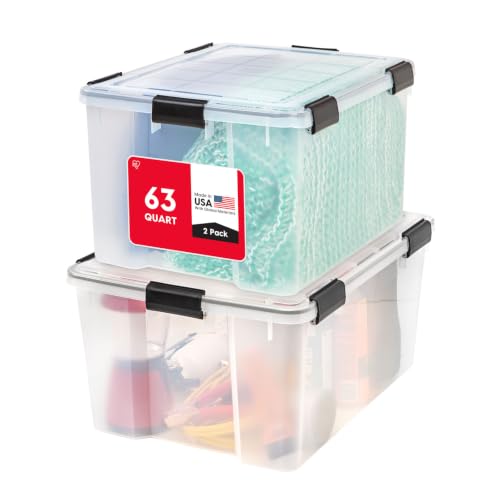 IRIS USA WeatherPro 63 Qt bins | Best gasket toteGasket lids and buckle latches on two stackable 63-quart bins | ★★★★½ 4.5/5 | Check price |
 HOMZ Durabilt camo totes | Rugged camp toteTwo stackable 15-gallon camo bins for truck and camp | ★★★½☆ 3.5/5 | Check price |
 ScentLok Carbon Adsorber | Passive odor supportDrop-in carbon that lasts a season without reactivation | ★★★★☆ 4/5 | Check price |
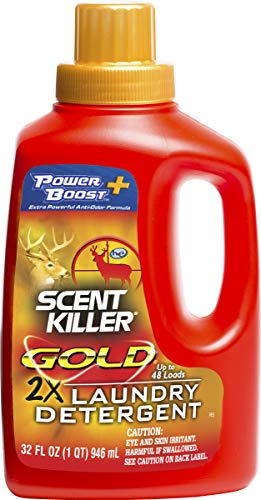 Scent Killer Gold Power Boost Detergent | Wash stepUnscented, no UV brighteners, works in HE washers | ★★★★½ 4.5/5 | Check price |
 PEET Wader Dryer | Boot dryingSilent dryer with extensions for tall boots and waders | ★★★★½ 4.5/5 | Check price |
We ranked these on how well each fills its job in a clean-storage system, based on the makers’ published specs and our own field routine; we didn’t lab-test odor levels for this update. The star ratings are our own editorial scores for fit to a deer hunter’s storage setup.
How to think about scent-control storage
A storage system has three jobs. It protects clean clothing after the wash, keeps different odor sources from touching each other, and makes the pre-hunt routine repeatable when you’re tired, late or packing in the dark. If it only works on a quiet Sunday afternoon, it will fail during rut week.
Think in clean lanes instead of one heroic duffel:
- Base lane: washed layers that touch your skin, plus gloves, socks and facemasks
- Outer lane: jackets, bibs and rain gear that brush vegetation
- Boot lane: footwear and anything that touched mud, truck mats or gas station floors
- Dirty lane: damp or field-worn gear headed home after the sit
Once you see storage that way, choosing a bag, tote, ozone unit, carbon absorber, detergent and dryer gets much simpler: each product serves one lane.

How we picked
Every product here had to earn a specific role in that lane system, not just carry a scent-control label:
We replaced one tote from our earlier list that’s no longer available and added a true ozone bag, since a locker alone doesn’t suit hunters who move between properties.
1. Hunters Specialties Scent-Safe Deluxe Travel Bag: best overall clothing bag
Scent-A-Way Scent-Safe Deluxe Travel Bag
A dedicated, foil-lined travel bag that keeps clean layers clean
Nylon outer and inner layers around a foil barrier, a double zipper and mesh inner pockets, built to carry a full set of hunting clothes from home to camp to stand.
The Scent-A-Way Scent-Safe Deluxe Travel Bag is purpose-built for hunting clothes rather than generic luggage. Nylon outer and inner layers enclose a foil barrier, a double zipper closes it, and mesh pockets inside keep gloves, facemasks and beanies from vanishing into the bottom.
It packs like a duffel and rides in the truck far more easily than a hard tote. Keep it dedicated to clean layers: the moment it carries snacks, batteries or yesterday’s damp gloves, it stops doing its job.
2. Scent Crusher Ozone Roller Bag 2.0: best ozone bag
Scent Crusher Ozone Roller Bag 2.0
Contained ozone treatment in a bag you can roll to camp
A 34 x 20 x 13-inch rolling bag with a large main compartment, two side pockets and an upgraded generator bracket for airflow, for treating outerwear, packs and boots between sits.
The Scent Crusher Ozone Roller Bag 2.0 is the ozone bag this guide was missing. It’s a 34 x 20 x 13-inch rolling bag with a large main compartment, two side pockets and an upgraded generator bracket for better airflow, so treatment happens inside the bag rather than in your truck cab.
Wheels and a handle make it practical for a long walk from the parking lot to camp. Use it for outerwear, packs and boots between sits on multi-day hunts, and follow Scent Crusher’s run and airing times before you put anything on.
3. Scent Crusher Locker 2.0: best ozone storage upgrade
Scent Crusher Locker 2.0
A full-height ozone locker for a season of outerwear and boots
About 73 inches tall with strong metal shelves, options to hang or stack gear and an upgraded generator hanger, so ozone treatment stays contained in the garage or camp.
For a garage or camp shed, the Scent Crusher Locker 2.0 gives ozone treatment a fixed home. It stands about 73 inches tall, 46 wide and 20 deep, with strong metal shelves and room to hang jackets or stack packs and boots, plus an upgraded generator hanger and zippers.
It’s the right step up once your wash and dry routine is solid and you hunt from one base all season. It’s too big to travel, so pair it with a bag for the drive.
4. IRIS USA WeatherPro 63 Qt bins: best gasket tote
IRIS USA WeatherPro 63 Qt bins
Gasket lids and buckle latches for structured clean-clothing storage
Two clear 63-quart bins with gasket seals, multi-buckle latches and grooved lids for stacking, sized for full sets of layers in the garage or truck.
The IRIS USA WeatherPro 63 Qt bins replace the IRIS gasket bins from our earlier list, which are no longer available. Each lid has a gasket seal and multi-buckle latches, the bins stack on grooved lids, and the two-pack gives you separate totes for early-season and cold-weather sets.
Clear sides let you see what’s inside without opening the lid and letting garage air in. A sealed tote is only your friend when the contents are dry, so check every layer before it goes in.
5. HOMZ Durabilt camo totes: best rugged camp tote
HOMZ Durabilt camo totes
Tough, stackable camo bins for organizing truck and camp gear
A two-pack of 15-gallon green camo totes with lids that stack on shelves and in truck beds; pair them with a scent-control bag or carbon for the cleanest layers.
The HOMZ Durabilt camo totes are 15-gallon, stackable bins sold as a two-pack. They suit truck beds, camp shelves and garage staging when you need one bin for clean layers and another for field-worn pieces.
There’s no gasket, so treat them as organized storage rather than a sealed odor vault. Line them with a scent-control bag, or drop a carbon absorber inside, for the cleanest layers.
6. ScentLok Carbon Adsorber: best passive odor support
ScentLok Carbon Adsorber
Quiet, drop-in carbon that supports clean closed storage
A carbon adsorber that goes into garment bags, duffels, footlockers or totes, lasts at least one season and needs no reactivation, with no spray or added moisture.
The ScentLok Carbon Adsorber works quietly inside a clean closed container without adding sprays or moisture. ScentLok says it fits garment bags, duffels and footlockers as well as its own totes, lasts at least a season and needs no reactivation.
Use it where it can work: closed spaces with dry gear. It won’t rescue fuel-smoked, food-smelled or damp clothing, so wash and dry the problem items first.
7. Scent Killer Gold Power Boost Detergent: best wash step
Scent Killer Gold Power Boost Detergent
An unscented wash that resets hunting clothes before storage
A concentrated 32-ounce hunting detergent with no UV brighteners and an HE formula that works in standard and high-efficiency washers.
Storage starts in the washer, and Scent Killer Gold Power Boost Detergent is the reset step before gear reaches a tote. It’s unscented, has no UV brighteners and works in standard and high-efficiency machines.
Keep household fragrance products out of the same load and skip dryer sheets, which undo the point of the wash. Our scent-free detergents for hunting roundup compares other options.
8. PEET Wader Dryer: best boot-drying tool
PEET Wader Dryer
Silent, gentle drying for tall boots, waders and everyday shoes
Warm-air dryer with two sets of 12-inch extensions reaching 42.5 inches, converting to a two-shoe dryer, with a 25-year warranty when registered.
Dry boots smell less, last longer and don’t contaminate clean storage. The PEET Wader Dryer circulates gently warmed air with no fan noise and dries in about 3 to 8 hours, according to PEET.
Two sets of 12-inch extensions reach 42.5 inches for chest waders and tall rubber boots, and it converts to a standard two-shoe dryer. PEET backs it with a 25-year warranty if you register within 10 days. For glove and helmet attachments, see our boot dryer attachments guide.
Scent-control bag vs airtight tote vs ozone bag
Each storage type solves one part of the problem. Here’s how they compare when you’re choosing the best scent control bag for hunting clothes or building around it:
| Storage type | Best use | Main limitation |
|---|---|---|
| Scent-control clothing bag | Truck travel, camp packing, soft layers, gloves and facemasks | Gets overloaded and contaminated if boots or damp gear share the space |
| Gasketed tote | Garage storage, pre-season organization, full clothing sets | Moisture sealed inside creates its own odor problem |
| Rugged camp tote | Bulk organization in truck beds and on camp shelves | Not a sealed odor container; order first, odor protection second |
| Ozone bag or locker | Contained treatment for outerwear, packs and boots between sits | Needs direction-following and airing time; never a substitute for washing |
| Carbon absorber in a tote | Passive odor support in clean, closed storage | Can’t fix dirty, smoky, fuel-tainted or damp gear |
Most hunters end up with two or three of these: a bag for travel, a tote for the garage, and a separate plan for boots.
Start with clean clothes, not a fancy container
The cleanest tote can’t save clothing washed with household fragrance or dried with scented sheets. Wash hunting layers separately with scent-free detergent, and run the machine empty first if it normally sees heavy fragrance. Dry everything fully, then move it straight into the clean lane instead of folding it on a couch, bench or tailgate.
Base layers sit against sweat, and small items like socks, neck gaiters and facemasks are easy to handle with bare hands at the truck. Pack them in smaller inner bags so you can grab what you need without pawing through the whole load.
Outerwear needs room; stuffing bibs and rain gear into a small bag traps damp spots. Read your rain gear’s care directions before washing. For more, see the hunting layering system for cold weather and our rain gear for deer hunting guide.
Bag or tote: which fits your hunting?
Use a clothing bag when you need mobility
A dedicated scent-control bag is the easiest answer if you travel between home, camp and different properties. It holds a full clothing set and packs into a crowded truck. Use it for clean layers and soft accessories only, with boots in their own bag and a separate dirty lane for the ride home.
Use a gasketed tote for repeatable season prep
Totes stack, label cleanly and keep categories apart: one for early-season clothing, one for cold-weather outerwear, and a small inner bag for gloves and facemasks. They also keep clothing above spilled coffee, muddy mats and loose tools in the truck.
The failure mode is moisture. Never seal damp base layers or sweaty bibs in a closed tote. If you store gear in a basement or garage with temperature swings, open and check the totes before the season. The hunting gear organization system shows how to tie totes into truck and camp zones.
Where ozone bags fit
Ozone bags and lockers help when they’re treated as a contained step, not a belief system. They’re useful for outerwear, packs and boots between sits on multi-day hunts when you can’t wash everything every night. Run the unit as designed and follow the maker’s timing and airing guidance.
Ozone doesn’t make dirty clothes clean, dry boots or fix sloppy storage. The U.S. EPA notes that ozone is a lung irritant and that generators sold as air cleaners can produce unhealthy levels indoors; its page on ozone generators is worth reading before you run one. Our ozone generators for deer hunting guide compares units.
Boots need their own lane
Boots are usually the dirtiest part of the system. They pick up truck odors, mud, rubber smell, sweat, creek water and whatever was on the gas station floor. Dry them first, store them separately, and keep boot handling away from clean-clothing handling.
Moisture drives odor, and rubber boots hold dampness longer than you’d think after creek crossings or warm early-season sits. If you’re still choosing a boot style, compare rubber vs leather hunting boots.
Carbon absorbers: useful, but not magic
Passive absorbers make sense inside a clean closed tote, boot bin or gear bag. They’re quiet and add no liquid or fragrance. Their role is support: they help maintain a cleaner space when the system is already disciplined, but they won’t erase camp smoke from a hoodie or make sweaty socks ready for morning.
Don’t bury them under wet clothing, and refresh them as the directions say during your pre-season reset. Sprays have a similar support role; our scent-control sprays roundup covers them.
The clean-to-stand storage sequence
Run this sequence every time, and the products above do their jobs:
Storage is only half of scent control. Wind, entry route and thermals still decide most encounters, so carry a wind checker and use it.
Common scent-control storage mistakes
- Boots in the clean-clothes tote. They contaminate clean layers fast, especially after wet walks.
- Sealing damp gear. Moisture creates odor and can damage clothing, bags and totes.
- Handling facemasks with dirty hands. Small items sit close to your nose and mouth.
- Letting the truck cab undo it. Food, fuel, coffee, pets and everyday clothes all ride there.
- Using ozone as a shortcut. It supports laundry and drying; it doesn’t replace them.
- Mixing clean and worn layers after the evening sit. Pack a return-home bag.
Rut week packing setup
During the rut you hunt more often, change stands faster and sit longer, so build the kit before the first cold front. Stage one clean clothing bag or tote, one boot bin, one dirty-return bag and one small pouch for gloves, facemask, release, headlamp and wind checker.
Pair the storage routine with your access plan: see the mobile hunting setup mods guide, our tree stands for deer hunting and how to hunt the rut lockdown.
Frequently asked questions
What is the best scent control bag for hunting clothes?
For most deer hunters, a dedicated clothing bag like the Scent-A-Way Scent-Safe Deluxe Travel Bag that holds only clean, fully dry layers. Choose a soft bag for travel and a gasketed tote such as the IRIS USA WeatherPro 63 Qt bins for garage or camp storage. Many hunters use both.
Are ozone bags worth it for hunting clothes?
They can be, as a contained between-sit step for outerwear, packs and boots on multi-day hunts. A bag like the Scent Crusher Ozone Roller Bag 2.0 keeps treatment inside the bag. Follow the maker’s timing and airing directions, and never use ozone in place of washing and drying.
Should hunting boots go in the same tote as clothes?
No. Boots carry moisture, mud, sweat and outside odor, so they need their own lane. Dry them first, ideally on a dryer like the PEET Wader Dryer, then store them in a separate bin or bag well away from your clean clothing.
How do I store deer hunting clothes between hunts?
Wash with scent-free detergent, dry fully, and pack clean layers into a dedicated bag or tote. Keep boots separate, add a carbon absorber if you like, and use a dirty-return bag for worn clothing after the sit so it never mixes with tomorrow’s layers.
Do carbon absorbers help in hunting totes?
They help maintain a cleaner closed space when gear is already washed and dry. The ScentLok Carbon Adsorber, for example, lasts at least a season in a bag or tote. They’re support items, not a fix for damp, smoky or dirty clothing.