
As an Amazon Associate I earn from qualifying purchases.
The first hour on stand is easy. The third hour, when the sun is up but the wind is not done with you, is when most hunters start shivering and climbing down. The best insulated hunting jacket keeps your core warm while you sit still, stays quiet when you turn to draw, and lets you hold out for the deer that moves at mid-morning.
This list is for deer hunters who sit in tree stands, ladder stands and ground blinds from November into late season. We compared six jackets, from a packable synthetic layer to a sherpa-lined parka, a waterproof pick, a budget 3-in-1 and a battery-heated option.
| Product | Best for | Our rating | |
|---|---|---|---|
 Sitka Kelvin AeroLite Hooded Jacket | Best overallPrimaLoft Gold and aerogel insulation that packs down small | ★★★★★ 5/5 | Check price |
 Huntworth Fairbanks Parka | Best heavyweightSherpa-lined waterproof parka with a harness opening | ★★★★½ 4.5/5 | Check price |
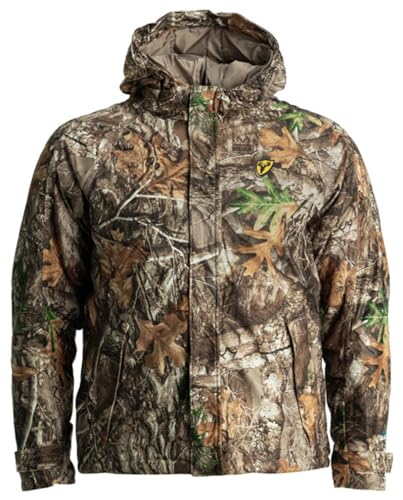 ScentBlocker Drencher Insulated Jacket | Best waterproofTaped-seam waterproof shell with 180g fill, per the maker | ★★★★½ 4.5/5 | Check price |
 HOT SHOT 3-in-1 Insulated Camo Parka | Best budget pickWaterproof shell plus zip-in insulated liner, worn apart or together | ★★★★☆ 4/5 | Check price |
 Carhartt Rugged Flex Insulated Camo Active Jac | Best for work and huntTough duck canvas with stretch and 80g quilted fill | ★★★★☆ 4/5 | Check price |
 TIDEWE Heated Hunting Jacket | Best heatedThree battery heat zones with up to 10 hours on low | ★★★★☆ 4/5 | Check price |
How we picked the best insulated hunting jacket
We read each maker’s specs and compared what matters for sitting still in the cold. We did not wear-test every jacket, so insulation weights, waterproof claims and battery run times below are the makers’ figures, not our measurements.
The star ratings are our own editorial scores for how well each pick fits this job: keeping a deer hunter warm, dry and quiet on long, cold sits.
1. Sitka Kelvin AeroLite Hooded Jacket: best overall
Sitka Kelvin AeroLite Hooded Jacket
Light, packable warmth that keeps working when it gets damp
A hooded synthetic jacket with PrimaLoft Gold and an aerogel layer, gusseted stretch cuffs for a clean draw, and a fitted hood that leaves your side vision clear.
The Sitka Kelvin AeroLite Hooded Jacket is a light insulated layer that does more than its weight suggests. On its product spec page, Sitka lists synthetic PrimaLoft Gold insulation with warm-when-wet performance, a fitted hood that does not block your side vision, and a total weight of 16 ounces.
Sitka also lists a silica aerogel insulation layer, a material more than 95 percent air, to add warmth without bulk. Gusseted stretch cuffs leave room to draw, and the jacket packs down small for the walk in. It works alone on dry, cold mornings and slips under a shell when it rains.
The drawback is that this is a premium layer with a DWR finish, not a waterproof shell. In steady rain or wet snow, you need a shell over it.
2. Huntworth Fairbanks Parka: best heavyweight
Huntworth Fairbanks Parka
Sherpa-lined warmth for the coldest all-day stand sits
A heavyweight parka with a brushed tricot shell, bonded waterproof film, sherpa fleece lining, harness access hole and a two-way front zipper with storm flaps.
The Huntworth Fairbanks Parka is built for the coldest sits of the year. Huntworth lists a heavy brushed tricot shell with a bonded waterproof film, plush sherpa fleece in the body and hood, and polyfill insulation. The sherpa is treated for scent reduction, per the maker.
It is loaded for stand hunting: a harness access hole, a two-way front zipper with storm flaps, a zip-off hood and sherpa-lined chest hand warmer pockets. The brushed face stays quiet against bark. The drawback is bulk: this parka is warm on stand but far too hot for a long hike in.
3. ScentBlocker Drencher Insulated Jacket: best waterproof
ScentBlocker Drencher Insulated Jacket
Keeps sleet and freezing rain out on wet late-season sits
A waterproof, windproof RainBlocker shell with taped seams, 180 grams of body insulation per the maker, an adjustable hood and S3 Silver odor treatment.
The ScentBlocker Drencher Insulated Jacket pairs a waterproof, windproof shell with 180 grams of body insulation, per the maker. Blocker uses its RainBlocker shell with taped seams and a three-piece adjustable hood, so sleet and freezing rain stay on the outside.
Blocker builds in its S3 Silver odor treatment to keep the jacket fresher between washes. Scent treatments never replace playing the wind, but they help over a long season. The drawback: two pockets is fewer than most jackets here, and the shell is louder than brushed tricot.
For more on keeping odor down through the season, see our guide to scent control for deer hunting.
4. HOT SHOT 3-in-1 Insulated Camo Parka: best budget pick
HOT SHOT 3-in-1 Insulated Camo Parka
A rain shell and an insulated liner that work alone or together
A seam-sealed waterproof shell with a quiet brushed tricot face, plus a zip-in liner with zoned polyfill insulation and a removable hood.
The HOT SHOT 3-in-1 Insulated Camo Parka gives you two jackets for one purchase. The outer shell is waterproof and works alone as a rain jacket, and the zip-in liner is insulated. HOT SHOT says both pieces are seam sealed and lists 200 grams of polyfill in the body and 150 in the sleeves.
The brushed micro tricot shell is quiet and resists burrs, and nylon patches reinforce high-wear areas. Wear the shell in October rain, the liner on a dry, crisp morning, and both together in December. The drawback: zipping two layers together adds bulk at the arms when you draw.

5. Carhartt Rugged Flex Insulated Camo Active Jac: best for work and hunt
Carhartt Rugged Flex Insulated Camo Active Jac
Tough duck canvas that hangs stands and hunts the same day
Insulated duck canvas in Mossy Oak Bottomland camo, with Rugged Flex stretch, 80 grams of quilted fill and a water-repellent finish.
The Carhartt Rugged Flex Insulated Camo Active Jac is a duck canvas work jacket in Mossy Oak Bottomland camo. Carhartt lists Rugged Flex stretch, 80 grams of quilted insulation, a durable water-repellent finish, and rib-knit cuffs and waist to keep out drafts.
This is the jacket for hunters who also hang stands, cut shooting lanes or do chores in the cold. Duck canvas shrugs off briars and bark. The drawbacks: 80 grams is a light fill for a long sit, it is water repellent rather than waterproof, and canvas can rasp against a stand rail.
6. TIDEWE Heated Hunting Jacket: best heated
TIDEWE Heated Hunting Jacket
Battery heat at your core for the coldest sits of the year
An insulated, windproof jacket with three heating zones, three heat settings and an included 10,000mAh battery pack rated for up to 10 hours on low.
The TIDEWE Heated Hunting Jacket adds battery heat to an insulated, windproof jacket. TIDEWE lists three heating zones, three heat settings on one button, and an included 10,000mAh battery pack rated for up to 10 hours on low, 5.5 on medium and 3 on high.
The shell has a DWR finish, windproof fabric and waterproof zippers, and the hood is detachable. Core heat helps your hands and feet stay warm too. The drawbacks: you must charge the battery, cold weather shortens run time, and the heat is in the jacket, not your legs.
For more battery-powered options, see our heated hunting gear picks.
Buying guide: choosing an insulated hunting jacket
All six will keep you warmer than a hoodie under a rain shell. The right one depends on how cold your season gets, how far you walk in, and whether wet weather or wind is the bigger problem.
Insulation for sitting still
Makers list synthetic fill in grams. Lighter fills, around 60 to 100 grams, suit early November and long walks. Heavier fills and sherpa linings suit late season and all-day sits. Treat grams as a rough guide: they are maker claims, and shell fabric and fit matter too.
Waterproof, windproof and quiet
- Waterproof jackets with taped or sealed seams are worth it if you hunt in sleet, wet snow or freezing rain. Our rain gear for deer hunting picks cover shells that go over a light layer.
- Windproof fabric matters most on a tree stand, where you sit up in the wind all day.
- Quiet brushed or fleece faces beat slick shells when you draw a bow at close range.
Layer under and around your jacket
An insulated jacket works best over a good base layer. A merino base layer keeps sweat off your skin, and our cold-weather layering system shows how base, mid and outer layers fit together. Pair your jacket with insulated hunting bibs so cold air cannot slip in at the waist.
Frequently asked questions
How much insulation does a hunting jacket need?
For early November in mild areas, 60 to 100 grams of synthetic fill or a light PrimaLoft layer is plenty. For late season, northern states or all-day sits, look at heavier fills like the 180 grams Blocker lists for the ScentBlocker Drencher Insulated Jacket, or a sherpa-lined parka. These are maker figures, so fit and layering matter too.
Is synthetic or down insulation better for hunting?
Synthetic is the safer choice for most deer hunters. Down is warm for its weight but loses loft when wet from sweat, rain or frost, while synthetic fills like PrimaLoft keep much of their warmth when damp. Synthetic also handles frequent washing with scent-free detergent better.
Are heated hunting jackets worth it?
They are if you sit still for hours in serious cold or run cold by nature. The TIDEWE Heated Hunting Jacket puts heat at your core, which helps your hands and feet too. Charge the battery the night before and pair it with hand warmers on the coldest days.
How should an insulated hunting jacket fit?
Try it on over the base and mid layers you will wear on stand. You should be able to draw your bow or shoulder your gun without the sleeves riding up or the back pulling tight. The hem should cover your lower back when you sit and lean forward.