
The best hunting boots for hot weather keep heat and moisture from building around your feet without sacrificing the traction, support, and protection required in hunting terrain. For very hot and mostly dry country, a membrane-free leather boot with strong underfoot support is usually the most capable choice. Mobile hunters may prefer a lighter suede-and-mesh design, while damp grass, brush, and uneven ground justify more coverage and reinforcement.
Do not judge a warm-weather boot by breathability alone. A soft, airy boot can become tiring when side-hilling or carrying equipment, and an aggressively built boot can trap enough perspiration to cause blisters. The right choice depends on how far you walk, how wet the ground will be, how much ankle structure you need, and whether cooling or weather resistance deserves priority.
Fast takeaway: Favor maximum ventilation for dry heat, a breathable but more protective upper for dew and brush, or a supportive tactical-style boot for long days on mixed terrain. Fit remains the deciding factor: heel hold, toe clearance, and midfoot security matter more than a long feature list.
What Matters in a Hot-Weather Hunting Boot
Hot-weather footwear has to manage two sources of moisture: perspiration generated inside the boot and water encountered outside it. Those demands conflict. Waterproof membranes help resist outside moisture, but they normally slow the escape of heat and vapor. Membrane-free uppers breathe more freely, yet they provide less insurance when a route crosses saturated grass, shallow water, or prolonged rain.
Start with the hunt rather than the boot. A dry-country spot-and-stalk hunter covering rocky ground needs airflow, a stable midsole, and an outsole that holds on loose surfaces. An early-season whitetail hunter may walk through wet vegetation before sitting for hours. An upland hunter creates more heat through continuous movement and needs a boot that flexes naturally without allowing the heel to lift.
- Airflow: Mesh panels, breathable linings, open-cell footbeds, and the absence of a waterproof membrane can help heat escape.
- Moisture transport: A lining should move perspiration away from the skin rather than merely feel soft in the store.
- Underfoot stability: A supportive midsole or shank reduces unwanted twisting on rocks, roots, side slopes, and uneven trails.
- Traction: Match the tread to the ground. Loose rock, damp leaves, packed trails, and slick clay do not reward the same outsole pattern.
- Protection: Toe reinforcement, durable upper materials, and sufficient ankle coverage matter in thorny vegetation and deadfall.
- Fit: The boot must hold the heel and midfoot while leaving enough room for toes to spread during descents and as feet swell.
Field rule: If your route is predominantly dry and heat is the main hazard, prioritize ventilation. If wet vegetation is unavoidable, accept a modest cooling tradeoff for an upper that better handles dew and splashes.
How These Hot-Weather Hunting Boots Were Ranked
The ranking starts with heat management, but it does not stop there. Each selection is a complete boot suited to field use rather than an accessory or casual shoe. The order weighs ventilation, moisture management, outsole traction, underfoot support, upper durability, ease of movement, and suitability for recognizable hunting conditions.
The first position goes to the strongest broad solution for demanding travel in extreme, dry heat. The next position emphasizes lightweight mobility and active heat dissipation. The remaining choices address early-season hunting around damp vegetation, sustained support across varied ground, and convenient entry with broader fit options. This approach prevents one specification—such as low weight or aggressive tread—from deciding the ranking in isolation.
A lower-ranked boot is not inherently inferior. It may be the better match when its particular configuration solves your main problem. Hunters who encounter morning dew should not automatically choose the most ventilated dry-country option, and someone who frequently changes footwear at the vehicle may reasonably value side-zip access more than maximum rigidity.
Ranking tip: Read the shortlist by role, not merely by position. First identify the field condition most likely to end your hunt early—overheating, wet vegetation, poor support, difficult fit, or slow transitions—then choose the boot that controls that failure mode.
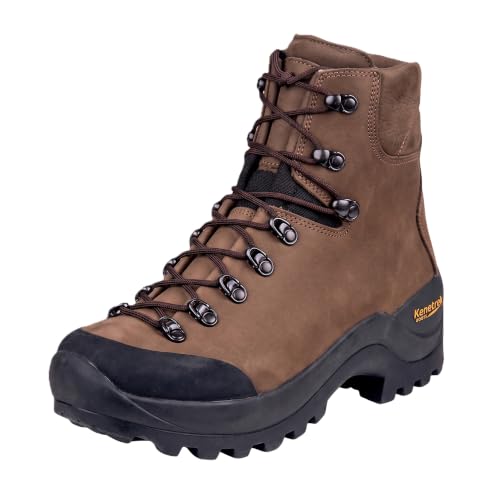
Kenetrek Desert Guide
A membrane-free, highly supportive boot that best suits demanding travel through extremely hot, rocky, and thorny country.

Danner Fullbore
A breathable, lower-profile option for active hunters who prioritize heat dissipation, mobility, and adaptable field traction.

Hunthor Early-Season Hunting Boot
A hunting-specific choice that combines breathable panels with reinforced protection and support for active early-season field conditions.

Danner Sonic
A supportive hot-weather tactical boot for hunters who need breathable comfort and dependable traction across long days on varied terrain.

Smith & Wesson Scout
A convenient hot-weather option for hunters who value fast entry, moisture management, and a choice between regular and wide fits.

Match the Boot to Heat, Moisture, and Hunting Pace
“Hot weather” covers several very different environments. Dry desert heat places a premium on ventilation and resistance to abrasive rock and thorny plants. Humid woodland heat makes sweat management critical, but morning vegetation can soak an overly porous upper. Warm mountain terrain adds side-hilling, loose stone, and sustained climbs. Early-season stand hunting combines a potentially wet approach with long periods of little movement.
For dry, exposed terrain, a membrane-free construction is often the cleanest answer. It allows heat to leave more readily and avoids relying on a waterproof barrier that may be unnecessary for the route. The tradeoff is straightforward: water can enter more easily. This configuration works best when the forecast, drainage, and route are understood and when the hunter can avoid prolonged contact with wet vegetation.
For active hunts, look for breathable upper panels and a lining designed to move moisture. Mobility matters because the foot repeatedly flexes and produces heat. A lower-profile boot can feel less restrictive, but it also places more responsibility on fit and foot strength. If the heel is not locked down, a light boot can still produce friction and blisters.
For early-season woods, the useful middle ground is a breathable boot with more substantial upper materials and reinforcement at vulnerable areas. This type of construction will not erase the ventilation-versus-water-resistance compromise, but it can better handle brush, damp grass, roots, and incidental splashes than a highly open upper. Hunters should still treat sustained rain, standing water, and creek crossings as separate problems.
For long days on varied terrain, cushioning and support become more important as fatigue accumulates. A boot may feel comfortable on level ground yet allow excessive twisting on a slope. Pay attention to how the midsole resists torsion, whether the outsole edges hold during side-hilling, and whether the collar supports the ankle without rubbing it.
Breathability Versus Waterproofing
No boot can maximize both airflow and waterproof protection. A waterproof membrane is useful when outside water presents the greater threat, but it can retain more warmth during high-output movement. A membrane-free boot generally releases heat more effectively, though it requires more careful route and weather planning.
Consider duration as well as probability. A short walk through dew may only dampen the upper, while hours of wet grass can overwhelm a boot not intended for persistent moisture. Conversely, choosing a heavily sealed boot for a dry hunt can leave socks saturated from the inside. Once the skin remains wet and soft, friction becomes more damaging even if no outside water entered.
Do not confuse water-resistant materials with a fully waterproof system. Treated leather and tightly woven fabric may repel limited moisture, but seams, tongues, and flex points remain potential entry paths. Plan creek crossings and prolonged rain separately rather than assuming a breathable hot-weather boot will cover every condition.
Socks are part of this system. Choose a thin or moderate hunting sock that manages moisture and fits without compressing the foot. Cotton is a poor default because it holds moisture against the skin. Carrying a dry spare pair is often more useful than increasing boot insulation or sealing the foot inside an overly warm construction.
Gaiters can provide a flexible alternative when dry heat is interrupted by seed heads, loose debris, or brief contact with damp vegetation. They add coverage only when needed and do not require turning the entire boot into a waterproof design. They are not a substitute for waterproof footwear in sustained wet conditions.
Fit Comes Before Features
A technically appropriate boot can still fail if its shape does not match your foot. Try hunting boots with the socks you expect to wear and, if possible, at a time when your feet are slightly swollen from normal activity. Lace them carefully before judging volume or heel hold.
Your heel should remain seated during uphill steps. Toes should not strike the front during a controlled descent, and the forefoot should not feel pinched across its widest point. The midfoot should feel secure without numbness or pressure. If the boot only feels stable when the laces are overtightened, the underlying shape may be wrong.
- Check heel movement while climbing stairs or an incline.
- Test toe clearance on a downhill surface.
- Confirm that the forefoot can spread without sliding laterally.
- Feel for pressure at lace hardware, tongue folds, and collar edges.
- Verify that normal lacing secures the foot without cutting circulation.
- Wear the exact sock thickness planned for the hunt.
- Test both feet; many hunters have meaningful differences between them.
Fit tip: Do not plan to fix a poor last shape through break-in. Materials may soften and flex more naturally, but a narrow toe box, misplaced arch, or unstable heel rarely transforms into a reliable fit.
Traction and Support on Real Hunting Ground
Outsole descriptions are useful only when translated into terrain. Deep, widely spaced lugs can clear loose soil and mud, but they may feel less predictable on smooth rock. A broad contact area can grip hard surfaces well yet retain mud. Flexible soles move naturally on trails, while stiffer foundations can reduce foot fatigue and unwanted twisting under a load.
For rocky dry country, inspect the outsole’s edge and heel braking area. Both help when descending loose grades or placing the foot across a slope. Toe protection also matters because repeated impacts with stone can damage the upper and bruise the foot.
In wooded terrain, assess grip on damp roots, leaf litter, and angled ground rather than focusing solely on tread depth. No outsole makes slick natural surfaces harmless. Shorter steps, deliberate foot placement, and trekking support can matter more than an aggressive-looking pattern.
Support should match both terrain and conditioning. Hunters accustomed to flexible footwear may value natural movement on maintained ground. Those carrying equipment over uneven country often benefit from stronger torsional resistance and a more structured footbed. The goal is not maximum stiffness; it is enough stability to prevent the foot from working excessively throughout the day.
How to Evaluate Hot-Weather Boots Before the Hunt
Do not make opening morning the first extended wear. A practical evaluation begins indoors, continues on short local walks, and ends with a route that resembles the hunt. Stop if you develop numbness, sharp pressure, or a persistent hot spot. Those are fit warnings, not proof that the boot needs to be endured.
- Inspect the construction. Check stitching, bonding, lace hardware, tongue alignment, collar padding, and reinforcement around high-wear areas.
- Set the fit. Use hunting socks, seat the heel, and adjust lacing by zone rather than pulling every section equally tight.
- Walk on slopes. Include climbs, descents, and side-hills to reveal heel lift, toe contact, and lateral movement.
- Add realistic equipment. A pack changes foot pressure and exposes support limitations that may not appear during an unloaded walk.
- Check moisture afterward. Note whether socks are mildly damp or saturated and whether moisture concentrates under the forefoot, heel, or collar.
- Reinspect the feet. Red areas identify developing friction points before they become blisters.
- Review the boot. Look for unusual wear, separating edges, damaged stitching, or debris trapped inside.
Repeat the assessment after changing socks or lacing technique. If the same hot spot returns, treat it as a compatibility problem. Insoles can refine support and volume, but they should not be used to disguise a boot that is fundamentally too short, too narrow, or unstable.
Hot-Weather Boot Care and Field Setup
Breathable footwear performs poorly when its lining is clogged with dirt or remains damp between hunts. Remove loose debris after use, follow the manufacturer’s cleaning guidance, and allow boots to dry in moving air away from excessive direct heat. Pulling removable footbeds can help the interior dry more evenly.
Avoid saturating breathable panels with a treatment intended for a different material. Conditioning leather, maintaining fabric, and preserving factory water resistance may require different products and methods. Follow the boot maker’s instructions rather than assuming one heavy coating is appropriate for the entire upper.
At camp or in the vehicle, loosen the laces and open the tongue so heat can escape. Change out of damp socks promptly. If conditions permit, alternate footwear between outings so each pair can dry completely. Persistent odor is usually a sign that moisture and bacteria are remaining in the boot, not merely a cosmetic issue.
Field rule: Manage moisture at every layer. A breathable boot cannot compensate for saturated cotton socks, overtight lacing, or being stored wet overnight.
Common Buying Mistakes
The most common mistake is buying for the season name instead of the actual route. “Early season” may mean dry grassland, humid hardwoods, wet marsh edges, or rocky high country. Each creates a different balance of airflow, water exposure, support, and traction.
Another mistake is assuming lighter always means cooler. Upper construction and lining design often matter more than the impression created by lifting a boot in hand. Likewise, a tall boot is not automatically too hot if its materials move moisture effectively, and a low-profile boot is not automatically breathable.
Hunters also overestimate waterproofing as a universal advantage. Waterproof protection is valuable when external moisture is unavoidable, but unnecessary sealing can work against comfort during sustained movement in dry heat. Choose it to solve a known water problem, not because it sounds like a free upgrade.
Ignoring width is equally costly. A wide option can help the right foot shape, but choosing extra width solely to gain toe room may leave the heel and midfoot unstable. Conversely, sizing longer to escape forefoot pressure can create toe strike and sliding. Match the boot’s shape, not just the printed size.
Finally, do not overlook the return path if fit proves wrong. Evaluate footwear indoors before exposing it to dirt, treatments, or wear that could affect the seller’s policy. The ideal outcome is a boot that fits correctly before any field conditioning begins.
Which Hot-Weather Hunting Boot Should You Choose?
Choose the top-ranked dry-heat specialist when maximum airflow, rugged upper protection, and stable footing matter more than resistance to sustained wet conditions. It is the clearest match for long travel through hot, abrasive country where a waterproof membrane would add little practical value.
Choose the lightweight mobility option when your hunt involves continuous movement and you want breathable upper materials, moisture management, and flexible field traction. It is especially relevant to hunters who prefer a lower-profile feel and do not need the coverage of a taller hunting boot.
Choose the early-season hunting specialist when damp grass, brush, roots, and uneven woodland ground are expected. Its role is to provide a more protective field configuration while still allowing heat to escape through breathable fabric panels. For persistent rain or standing water, use footwear designed around that wetter assignment instead.
Choose the all-day support option when varied terrain and sustained wear take priority. Its combination of breathable construction, cushioning, and slip-resistant traction is intended for hunters who split time between trails, rough ground, and long periods on their feet.
Choose the quick-access option when easy changes and fit choice are central to the decision. Side-zip entry is useful for frequent transitions, while regular and wide versions provide another route toward a suitable fit. Hunters needing maximum dry-country structure or more hunting-specific reinforcement should favor an earlier-ranked alternative.
If none of the ranked options matches your foot or weather exposure, do not force the purchase. A well-fitting non-waterproof hiking boot can be a sensible non-commercial alternative for maintained dry terrain, while a properly fitted waterproof hunting boot may be safer for prolonged wet vegetation. Fit, environment, and hunting pace should make the final decision—not the rank number alone.
Compare the recommended options
| Product | Best use | Why it stands out | Best fit | Amazon |
|---|---|---|---|---|
|
#1 Kenetrek Desert Guidebest_for_extreme_heat |
Long hunts in very hot, dry, abrasive terrain | A membrane-free, highly supportive boot that best suits demanding travel through extremely hot, rocky, and thorny country. | Choose this if you cover substantial ground in dry heat and need more structure and abrasion resistance than a light mesh boot provides. | View on Amazon |
|
#2 Danner Fullborebest_lightweight_option |
Mobile warm-weather hunts on trails and mixed ground | A breathable, lower-profile option for active hunters who prioritize heat dissipation, mobility, and adaptable field traction. | Choose this if you stay mobile, prefer a less restrictive boot, and want strong ventilation without giving up a field-oriented outsole. | View on Amazon |
|
#3 Hunthor Early-Season Hunting Bootbest_for_early_season_hunting |
Early-season deer, turkey, upland, and scouting trips through damp vegetation | A hunting-specific choice that combines breathable panels with reinforced protection and support for active early-season field conditions. | Choose this if your warm-weather route includes brush, damp grass, roots, and rough ground that call for more hunting-specific coverage. | View on Amazon |
|
#4 Danner Sonicbest_for_all_day_support |
Extended hunting and hiking on mixed surfaces | A supportive hot-weather tactical boot for hunters who need breathable comfort and dependable traction across long days on varied terrain. | Choose this if sustained comfort, ankle-height structure, and mixed-terrain stability matter more than the lightest possible feel. | View on Amazon |
|
#5 Smith & Wesson Scoutbest_for_quick_access_and_wide_feet |
Frequent footwear changes, wider feet, and general warm-weather outdoor use | A convenient hot-weather option for hunters who value fast entry, moisture management, and a choice between regular and wide fits. | Choose this if side-zip access or a wide fit is more important than maximum hunting-specific reinforcement. | View on Amazon |
As an Amazon Associate, ProHuntingHacks may earn from qualifying purchases.