
As an Amazon Associate I earn from qualifying purchases.
Cold feet end more late-season sits than anything a deer does. Your boots are rated for the cold, your socks are wool, and by mid-morning your toes still ache against a frozen stand platform. The best heated insoles put a battery-powered heating element right under your foot, inside the boots you already hunt in, so you can stay put through the last good hour.
This list is for deer hunters who sit still in real cold: tree stands, ladder stands, saddles and ground blinds. Prefer the heat built into the sock instead? See our picks for the best heated socks for hunting, published alongside this guide.
| Product | Best for | Our rating | |
|---|---|---|---|
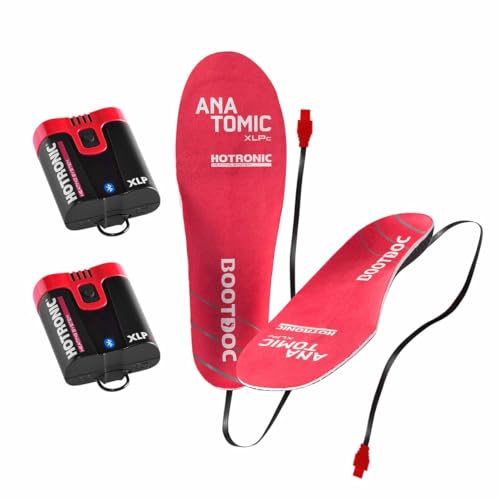 Hotronic XLP 2C Bluetooth Foot Warmer | Best overallUp to 24 hours of warmth, boost mode and Bluetooth app | ★★★★½ 4.5/5 | Check price |
 Therm-ic Heat Flat with C-Pack 1700 B | Best for long sitsThin trim-to-fit insoles with up to 17 hours of heat | ★★★★½ 4.5/5 | Check price |
 KEMIMOTO Full Foot Heated Insoles | Best full-foot heatWarms toes, arches and heels, app or button control | ★★★★☆ 4/5 | Check price |
 Dr.Warm Rechargeable Heated Insoles | Best thin fitAbout 0.16 inches thick for snug boots, app control | ★★★★☆ 4/5 | Check price |
 Thermrup Electric Heated Insoles | Best heel-to-toe heatRubber heating element from heel to toe, machine washable | ★★★★☆ 4/5 | Check price |
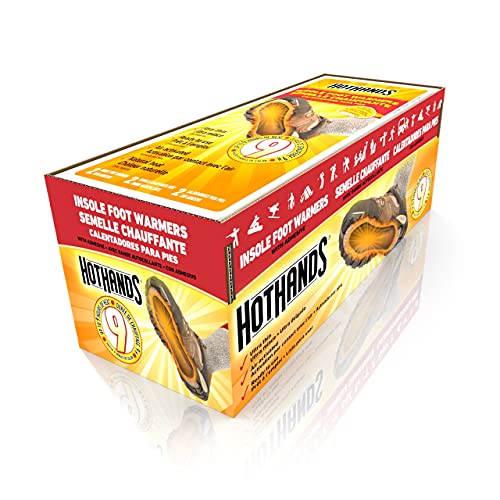 HotHands Insole Warmers | Best no-battery backupAir-activated, up to 9 hours, nothing to charge | ★★★½☆ 3.5/5 | Check price |
How we picked the best heated insoles
We read each maker’s specs and compared what matters when you sit for hours in insulated boots. We did not run timed battery tests on every set, so the run times and temperatures below are the makers’ own figures.
The star ratings are our own editorial scores for how well each set fits this job: keeping a deer hunter’s feet warm through long, still sits in late-season cold.
1. Hotronic XLP 2C Bluetooth Foot Warmer: best overall
Hotronic XLP 2C Bluetooth Foot Warmer
All-day heated insoles with a boost mode and phone control
Slim anatomic heated insoles with two 6000mAh battery packs, three steady heat settings plus boost, and up to 24 hours of listed warmth.
The Hotronic XLP 2C Bluetooth Foot Warmer is the set to buy if you hunt hard in the cold every year. Hotronic lists up to 24 hours of warmth from two 6000mAh battery packs, which is a full dark-to-dark sit on a low setting with room to spare.
You get three steady heat settings plus a boost mode, and the Hotronic Heat app lets you change heat from your phone without unlacing a boot. The anatomic insoles are slim, so they fit most hunting boots. The drawbacks: it costs the most here, and it comes in set sizes, so check the size chart before you order.
2. Therm-ic Heat Flat with C-Pack 1700 B: best for long sits
Therm-ic Heat Flat with C-Pack 1700 B
Thin, trim-to-fit heated insoles with up to 17 hours of heat
Easy-to-cut flat heated insoles paired with Bluetooth C-Pack 1700 B batteries, three heat settings and app control from your phone.
The Therm-ic Heat Flat with C-Pack 1700 B pairs thin, easy-to-cut heated insoles with Bluetooth battery packs. Therm-ic lists up to 17 hours of heat from the 1700 B packs, and you control the three heat settings from the Therm-ic app.
The flat insole trims to fit almost any boot, which is a big plus if you hunt in a pair with an odd last or a removable liner. The drawback: the heating elements only work with Therm-ic C-Pack batteries, so you are locked into their packs for spares.
For hunters who already own good boots with roomy toes, this is the one to start with.
3. KEMIMOTO Full Foot Heated Insoles: best full-foot heat
KEMIMOTO Full Foot Heated Insoles
Heat from toes to heels with app or button control
Full-foot heating elements, three heat levels with a timer, a 5000mAh leg-strap battery and USB-C charging, with a thin trim-to-fit EVA base.
The KEMIMOTO Full Foot Heated Insoles warm the toes, arches and heels instead of one spot under the toes. You can change the three heat levels, set a timer and turn off the indicator lights from the app or with a button on the battery.
Each 5000mAh battery rides on a leg strap and charges over USB-C. KEMIMOTO lists up to 6 hours on low, 4 on medium and 3 on high. The drawback: that is the shortest run time of the rechargeable sets here, so plan on low heat or a midday charge.

4. Dr.Warm Rechargeable Heated Insoles: best thin fit
Dr.Warm Rechargeable Heated Insoles
Ultra-thin heated insoles that fit snug hunting boots
About 0.16 inches thick, with three app-controlled settings from about 100°F to 140°F, trim-to-fit sizing and leg straps that hold the batteries.
The Dr.Warm Rechargeable Heated Insoles are about 0.16 inches thick, so they slip into snug boots where a thicker insole would squeeze your toes. Dr.Warm lists three settings from about 100°F on low to 140°F on high, controlled from its app.
The insoles trim to size, and the batteries ride in pockets on two leg straps. The foam base breathes and absorbs shock on the walk in. The drawback: the listing does not give a run time, so carry the charger to camp and test them on a short hunt first.
5. Thermrup Electric Heated Insoles: best heel-to-toe heat
Thermrup Electric Heated Insoles
A rubber heating element that warms from heel to toe
German-designed heated insoles with an 18 cm heating surface, four heat levels from a 2500mAh battery and hand or machine washing.
The Thermrup Electric Heated Insoles use a rubber heating element instead of fine wires, with an 18 cm heating surface that runs from heel to toe. Thermrup designed them in Germany and lists four heat levels from a 2500mAh, 7.4V battery.
They fit US sizes 4.5 to 14 and can be washed by hand or in the machine, which helps after a muddy season. The drawbacks: at 6mm they are the thickest here, and the 70 cm cable needs tucking so it does not snag on brush or a stand ladder.
6. HotHands Insole Warmers: best no-battery backup
HotHands Insole Warmers
Disposable insole warmers for the day a battery dies
Air-activated warmers that stick to the bottom of your sock and give up to 9 hours of heat, with nothing to charge or wire up.
The HotHands Insole Warmers are air-activated and disposable. Open the pack, peel the backing and stick each one to the bottom of your sock. HotHands lists up to 9 hours of heat at an average of 99°F and a top of 113°F.
They are not a true heated insole, but every hunter should carry a pair for the morning a battery dies or you forget to charge. They weigh almost nothing in a pack. The drawbacks: there is no heat control, they need air to work, and you throw them away after one use.
Buying guide: choosing the best heated insoles
Heated insoles are a tool for the coldest sits, not a fix for tight boots or wet feet. Get those two right first, then add heat.
Heated insoles vs heated socks
- Heated insoles keep your favorite wool socks in play, and one set moves from boot to boot. The battery sits on the boot or your leg, so a cable runs up from the boot top.
- Heated socks put the heat over or around the toes, with the battery in a pocket at the cuff. You need a second pair to rotate on multi-day hunts.
- Both work best with roomy, well-insulated boots. Our best hunting socks guide covers the sock half.
Fit with your boots
Pull the factory insole out and use it as your guide. A heated insole that adds thickness can make a snug boot tight, and tight boots cut blood flow and make feet colder. Our guide to how much insulation hunting boots need helps you match the two, and our cold-weather hunting boots picks have room for an insole.
Why stand hunters need more heat
Wind on an exposed stand pulls heat away much faster than still air. The National Weather Service notes that wind chill is based on how fast exposed skin loses heat, and that higher wind drives skin and body temperature down.
Your feet are not exposed, but that same wind chills your whole body, and your body pulls blood away from your feet first to protect your core. Steady heat under the foot keeps feeling in your toes so you notice trouble sooner.
Dry feet stay warm, so pull the insoles and dry your boots each night at camp. Our boot dryer guide covers tall hunting boots, and our hunting boot accessories roundup covers laces, gaiters and more.
Frequently asked questions
Are heated insoles worth it for deer hunting?
Yes, if you sit for hours in real cold and your feet are what sends you home. A set like the Hotronic XLP 2C Bluetooth Foot Warmer gives steady heat through a long sit in the boots you already own. For early bow season they are overkill, so buy them for late November and December.
How long do heated insoles last on one charge?
It depends on the battery and the setting. Hotronic lists up to 24 hours for its XLP 2C set and Therm-ic lists up to 17 hours with the C-Pack 1700 B, while KEMIMOTO lists 3 hours on high and 6 on low. Cold weather shortens run time, so charge the night before and start on low.
Can you put heated insoles in rubber boots?
Yes, as long as the boot has room. Thin, trim-to-fit insoles like the Therm-ic Heat Flat with C-Pack 1700 B work best in rubber boots. Run the cable up the back of the boot so it does not rub, and check that your toes can still wiggle with the insole in place.
Should I wear heated insoles or heated socks?
Insoles if you want to keep your own wool socks and move heat between boots. Heated socks if you want heat over the toes and no cable outside the boot. Some hunters use both on the coldest days. See our heated hunting gear guide for the rest of the system.