
As an Amazon Associate I earn from qualifying purchases.
A buck that ignores a grunt will often still swing over to check out a doe. That is why the best doe bleat call earns a spot in your pack right now, with the rut on. A soft estrus bleat says there is a receptive doe nearby, and it does not ask a buck to fight anyone.
This guide covers bleat cans, the tip-over calls you turn upside down, plus two mouth-blown estrus calls for hunters who want bawls and distress sounds too. If you want a grunt tube, our grunt call guide covers those, so we kept this list to doe sounds.
| Product | Best for | Our rating | |
|---|---|---|---|
 Primos The Original Can | Best overallClassic tip-over estrus bleat, freezeproof, with a thumb locator | ★★★★★ 5/5 | Check price |
 Primos The Great Big Can | Best long-range canLarger can for louder bleats on windy days and open fields | ★★★★½ 4.5/5 | Check price |
 Knight & Hale Nanny Doe Bleat | Best for bleats and bawlsNo-blow flip can that makes doe bleats and bawls | ★★★★½ 4.5/5 | Check price |
 Primos Lil Can | Best compact canHigher young-doe bleats in a small, one-handed can | ★★★★☆ 4/5 | Check price |
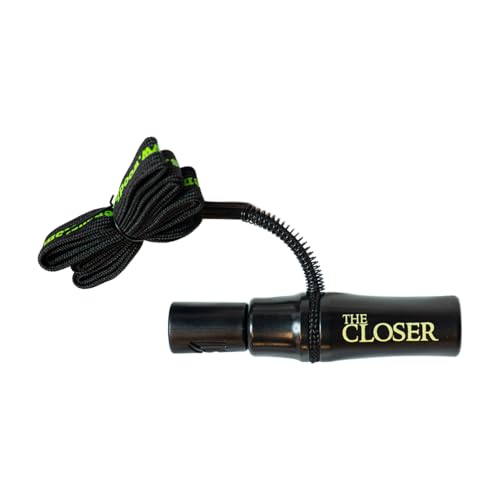 WoodHaven Closer | Best mouth-blown callDoe estrus and young-deer distress sounds, soft to loud | ★★★★½ 4.5/5 | Check price |
 Primos Bleat and Bawl | Best for early seasonEstrus bleat plus fawn distress bleat and bawl in one call | ★★★★☆ 4/5 | Check price |
How we picked the best doe bleat call
We compared each call on what matters from a stand during the rut. We did not record or measure every call side by side, so volume and range notes below come from the makers’ own descriptions.
The star ratings are our own editorial scores for how well each call fits this job: pulling a rutting buck into bow or gun range with doe sounds.
1. Primos The Original Can: best overall
Primos The Original Can
The tip-over estrus bleat that needs no practice at all
Turn it over and back for a pleading doe estrus bleat. A raised thumb locator helps you seal the vent, and it is built to work in freezing weather.
Primos The Original Can is the call most hunters picture when they hear “bleat can.” Turn it upside down, turn it back, and it gives the pleading bleat of a doe in estrus. There is no reed to learn and nothing to blow, so the sound is the same at noon as it is at first light.
A raised thumb hole locator helps you find the vent by feel and seal it for a consistent tone. Primos lists it as freezeproof, which counts on a frosty November sit. The drawback: it does one sound well, and it is bulky in a jacket pocket compared with a slim tube.
If you want two pitches, the Primos Can Family pack pairs this call with the smaller Lil Can.
2. Primos The Great Big Can: best long-range bleat can
Primos The Great Big Can
Louder, longer-range bleats for wind and wide-open fields
The larger version of the classic tip can, made to carry estrus bleats farther across open ground and through wind from the pre-rut into the post-rut.
Primos The Great Big Can is the larger version of the tip can, built to throw louder estrus bleats farther. Primos pitches it for windy days and wide-open fields, the places where the standard can gets lost before it reaches a cruising buck.
It works the same way, so there is nothing new to learn, and Primos rates it for pre-rut, rut and post-rut hunting. The drawbacks: it is bigger to carry, and it is too loud for a buck that is already working toward you at 40 yards. Keep a smaller call for the close work.
3. Knight & Hale Nanny Doe Bleat: best can for bleats and bawls
Knight & Hale Nanny Doe Bleat
A flip-to-call gravity can for doe bleats and bawls
No blowing and no reeds: flip the can for doe bleats and bawls that carry to distant deer. Light enough to run with one hand on stand.
The Knight & Hale Nanny Doe Bleat is a gravity can, so you flip it to call instead of blowing into it. Knight & Hale says it gives doe bleats and bawls that reach distant deer, which makes it useful for locating deer as well as calling a buck closer.
It is light and easy to run with one hand, which matters when your other hand holds a bow. The drawback: it is newer than the Primos cans and has less of a track record. For a higher, younger doe sound, Knight & Hale also makes the smaller Quick Doe Bleat.
4. Primos Lil Can: best compact bleat can
Primos Lil Can
Small can, higher young-doe bleats, easy one-hand use
The compact member of the Primos can family, with higher-pitched young-doe estrus bleats for close calling and a light build that rides in any pocket.
The Primos Lil Can is the small member of the family. Primos says it gives the higher-pitched bleats of younger does, and it is light enough to hang in a pocket all season without noticing it. It runs easily with one hand.
A higher, softer bleat is a good choice for close calling, early season and the late season when young does are a bigger share of what bucks are chasing. The drawback is range: on a windy day or across a big field, the Great Big Can will carry much farther.

5. WoodHaven Closer: best mouth-blown estrus call
WoodHaven Closer
A dedicated doe and fawn call you can run soft or loud
A compact mouth-blown call for doe estrus bleats in the rut and young-deer distress bleats and bawls earlier in the season, with full control of volume.
The WoodHaven Closer is a mouth-blown call built only for doe and young-deer sounds. It makes young-deer distress bleats and bawls, and doe estrus bleats for the rut, instead of being one more grunt tube with a bleat setting added.
Because you blow it, you control pitch, length and volume. WoodHaven says it can run very soft for a close deer or much louder when you need reach. The drawback: a mouth call takes practice, and a bad note is easier to make than with a can.
6. Primos Bleat and Bawl: best for early season and the rut
Primos Bleat and Bawl
Estrus bleats for bucks, distress bawls for curious does
A mouth-blown call with a doe estrus bleat for the rut and a young deer's distress bleat and bawl that plays on a doe's maternal instinct early in the season.
The Primos Bleat and Bawl is a mouth-blown call that covers two jobs. It gives a doe estrus bleat for calling bucks during the rut, and the distress bleat and bawl of a young deer, which appeals to the maternal instinct of does.
Primos aims it at early-season bowhunters, when does are still tending fawns, but it carries on into the rut. The drawback is the same as any mouth call: it takes some practice, and a distress bawl on public land can bring in more than deer.
Buying guide: choosing a doe bleat call
All six make doe sounds that rutting bucks respond to. The right pick depends on where you hunt, how windy it gets, and whether you want a foolproof can or a call you can shape yourself.
Bleat can vs mouth-blown estrus call
- Bleat cans make the same sound every time with one tip, need no practice, and leave your mouth free. They make one sound and can be bulky.
- Mouth-blown estrus calls let you change pitch, length and volume, and often add bawls and distress sounds. They take practice and need your breath.
- Size matters on cans: big cans carry farther in wind and open fields, small cans give higher, softer bleats for close deer.
Whichever style you pick, carry it where you can reach it without big movement, such as a chest pocket or a lanyard tucked inside your jacket.
What the research says about deer sounds
Researchers at the University of Georgia recorded twelve different white-tailed deer vocalizations in a captive herd, published in Vocalizations of White-tailed Deer (Atkeson, Marchinton and Miller, 1988). They described the buck’s tending grunt during courtship of an estrous doe, and a contact call that only females made.
The study did not list an “estrus bleat” as its own call, so treat the can’s sound as a doe voice that tells deer another deer is nearby, not as a magic breeding signal. Our guide to the deer rut explains how breeding behavior changes week to week.
How to use a doe bleat call during the rut
A bleat works best as part of a setup, not as a random noise in the woods. Here is a simple sequence for a rut sit.
Bleats also pair well with rattling. Rattle to sound like two bucks fighting over a doe, then bleat to sell the doe. Our rattling how-to and rattling antler picks cover the fight sounds.

A doe decoy makes the sound believable. See our deer decoy picks for rut setups, and our doe estrus vs buck lure guide for the scent side of the same idea.
Frequently asked questions
When should I use a doe bleat call?
Bleats work best from the pre-rut through the peak rut, when bucks are cruising for does. A soft estrus bleat from Primos The Original Can is a good start. Early in the season, distress bleats from a call like the Primos Bleat and Bawl can draw curious does. Our pre-rut vs rut checklist shows what changes.
How often should I use a bleat can?
Less than you think. Two or three bleats, then wait 15 to 20 minutes. Deer do not call nonstop, and a buck that hears too much will hang up looking for the doe. Call more often only in thick cover or wind, where sound does not carry.
Which is better, a bleat can or a grunt call?
They do different jobs. A grunt tube sounds like another buck, which can draw a fight or push a younger buck away. A bleat can sounds like a doe, which almost any buck wants to see. Most rut hunters carry both and use them together.
Do doe bleat calls work on public land?
Yes, but call sparingly, since pressured deer hear a lot of calling. Soft bleats from a small can like the Primos Lil Can sound natural at close range. Wear blaze orange where required, because other hunters can hear your calls too.