
The short answer
The best crossbow scope for a 400-FPS bow is one whose documented speed range includes 400 FPS, whose reticle can be calibrated to your actual arrow trajectory, and whose controls remain manageable under hunting conditions. The Hawke XB30 Zoom FFP is the strongest broadly useful choice here because its stated calibration range runs from 385 FPS to 420 FPS and its first-focal-plane reticle keeps the aiming references proportional throughout the zoom range.
That does not make it the automatic answer for every hunter. A fixed-power scope can be simpler when shots are deliberate and distances are familiar. A wider-angle variable scope can be faster in close cover. An extended-range reticle can be useful for disciplined target practice and carefully verified field setups, while a lighter optic can improve the balance of a crossbow that already feels front-heavy.
Start with compatibility, not magnification. The speed printed on a crossbow or arrow package is only a starting point. Arrow weight, broadhead choice, string condition, weather, and the individual bow can change the trajectory. A suitable scope must therefore provide a workable calibration system, but the shooter still has to verify every intended aiming point with the hunting arrow and broadhead combination.
Fast takeaway: Choose the Hawke XB30 Zoom FFP for the most versatile 400-FPS setup, the TenPoint Rangemaster 100 for a structured extended-distance reticle, the TenPoint Pro-View 400 for fixed-power simplicity, the Hawke XB30 Compact for wide-angle handling, or the BARNETT model when low weight and illuminated hold points are the priorities.
How these crossbow scopes were ranked
The first requirement was direct relevance to the stated use: every scope had to be a complete crossbow optic designed, calibrated, or documented as compatible with a bow shooting at 400 FPS. Accessories, mounts, rings, covers, and replacement parts were excluded. That matters because a conventional rifle scope may hold zero on some crossbows, but it usually does not provide a crossbow-specific trajectory system that can be aligned with a fast arrow.
Speed coverage came next. A narrow calibration range centered near 400 FPS reduces the risk of forcing an unsuitable reticle to fit the bow. Broader speed ranges remain useful when they include 400 FPS and provide a secure adjustment mechanism. Reticle usability was weighted alongside that range: the markings should be easy to distinguish, provide a logical progression, and avoid demanding unnecessary control changes when a shot develops quickly.
Optical design and field handling also influenced the order. Useful factors included magnification range, wide-angle viewing, illumination, lens coatings, weather-resistant construction, and the simplicity of the sight-in process. Maximum reticle distance was not treated as proof of an ethical hunting distance. It was considered a feature for trajectory mapping and practice, subject to the shooter confirming accuracy and retaining enough arrow performance for the intended animal.
Field rule: A speed dial or calibrated reticle does not replace verification. Rank a scope by how reliably it helps you confirm your trajectory, not by the farthest number printed beside an aiming mark.
What 400 FPS compatibility actually means
A crossbow scope does not measure arrow speed by itself. On speed-adjustable designs, the speed control changes the relationship between the primary zero and the lower aiming references. When that relationship matches the bow’s real trajectory, each reference can correspond to a useful distance. If it does not match, the primary zero may look correct while errors grow progressively at longer distances.
This is why a scope marked for a speed range that includes 400 FPS is preferable to one with no relevant trajectory guidance. It gives the shooter a legitimate calibration starting point. The final setting still belongs to the complete shooting system: crossbow, arrow, insert, nock, broadhead, scope height, and environmental conditions. Changing a major component calls for another verification session.
Magnification behavior deserves equal attention. Some variable crossbow scopes connect the magnification or speed setting to reticle calibration. Changing the setting after sight-in can change how the references correspond to trajectory. A first-focal-plane reticle behaves differently because it scales with magnification, allowing the aiming pattern to retain its proportional relationship through the zoom range. Fixed-power optics avoid the issue by removing magnification changes altogether.
Before choosing, check the bow manufacturer’s optic guidance, rail type, ring requirements, available mounting space, and clearance around the limbs and cocking system. Confirm that the installed scope allows a natural head position and a full sight picture. Compatibility on paper is not enough if the eyepiece sits awkwardly or a control interferes with normal operation.

Hawke XB30 Zoom FFP
This is the most broadly capable choice because its speed calibration directly covers 400-FPS bows and its first-focal-plane reticle remains proportional throughout the zoom range.

TenPoint Rangemaster 100
Its broad speed adjustment and structured etched-glass reticle make it a strong option for shooters who carefully verify trajectory references at increasing distances.

TenPoint Pro-View 400
This scope favors simplicity with fixed magnification and a clean sequence of illuminated aiming references for bows near 400 FPS.

Hawke XB30 Compact
Its wide-angle optical system, locking speed adjustment, and detailed trajectory reticle suit hunters who need quick acquisition across changing distances.
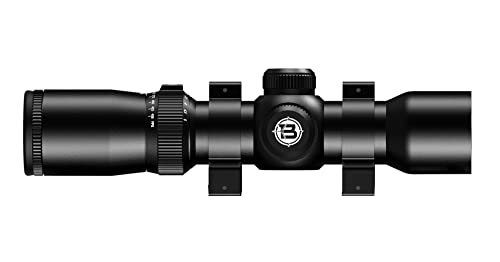
BARNETT Illuminated Crossbow Scope
This is the weight-conscious choice for hunters who still want variable magnification, illuminated aiming references, and documented compatibility with a 400-FPS crossbow.
Choosing between first-focal-plane, variable, and fixed-power scopes
The Hawke XB30 Zoom FFP uses a first-focal-plane reticle across its 2-8x magnification range. Its principal advantage is operational flexibility: the aiming references remain valid throughout the magnification range after the system is properly calibrated. A hunter can use less magnification for awareness in close cover and increase magnification for a more deliberate view without intentionally matching one particular zoom setting to bow speed.
That flexibility brings more controls and a denser capability set than some hunters need. Anyone who prefers to establish one sight picture and leave it alone may find a fixed-power design more direct. The TenPoint Pro-View 400 uses 4x magnification and provides an orderly illuminated sequence from 20 through 70 yards. There is no zoom decision to make when a deer appears, which can reduce avoidable handling and simplify repeatable practice.
The TenPoint Rangemaster 100 occupies a different middle ground. Its 2-7×36 configuration accommodates crossbows from 380 FPS to 505 FPS, with magnification dictated by speed. The etched-glass reticle uses illuminated dots at 20, 30, and 40 yards, illuminated crosshairs at 50, 60, and 70 yards, and chevrons at 80, 90, and 100 yards. This structured progression is well suited to shooters who want distinct references and are prepared to complete the specified 20-yard sight-in and 50-yard verification process.
The Hawke XB30 Compact favors fast visual acquisition and broad trajectory adjustment. Its 1.5-6×36 wide-angle system combines a locking speed adjuster covering 250 FPS to 450 FPS with references from 20 to 100 yards, intermediate 5-yard marks, and windage indicators. This gives the shooter considerable information, but it also demands careful practice. A feature-rich reticle is only an advantage when the correct mark can be identified without hesitation.
The BARNETT scope uses 1.5-5x magnification and is documented for crossbows with speeds up to 450 FPS. It provides illuminated red or green aiming references from 20 to 100 yards while weighing 0.65 pounds. That combination suits hunters trying to preserve manageable balance while retaining variable magnification and low-light reticle visibility.

Which specifications matter in the field
Speed calibration: Verify that 400 FPS falls inside the documented range, then treat the marked setting as a starting point. Chronograph data can improve the starting estimate when gathered with the exact hunting arrow. If no chronograph is accessible, careful target verification can still reveal whether lower references land high or low, but adjustments should follow the scope manufacturer’s instructions.
Reticle layout: More aiming references are not inherently better. Clearly separated dots, crosshairs, or chevrons can help a shooter index the intended distance. Closely spaced marks may become difficult to distinguish against brush, dark hide, or uneven light. Evaluate the reticle at realistic target backgrounds rather than only against a clean paper bullseye.
Magnification: Higher magnification can make a small aiming point easier to see, but it also narrows the visible scene and can exaggerate normal movement. Lower magnification generally makes it easier to find an animal quickly and monitor nearby obstacles. Set the scope for the most likely encounter before the hunt rather than planning to make large adjustments after the animal appears.
Illumination: Red or green illumination can keep the aiming pattern visible when the background is dark, but excessive brightness can obscure fine detail and reduce the hunter’s ability to see through the reticle. Begin with a low setting and increase it only enough to separate the aiming point from the target. Illumination does not extend legal shooting light or compensate for an uncertain target.
Optical and weather protection: Fully multi-coated lenses are intended to improve light transmission and contrast. Nitrogen-purged, waterproof, fogproof, and shockproof construction can help an optic remain usable through temperature changes, precipitation, and crossbow vibration. These features reduce risk; they do not eliminate the need to protect lenses, check fasteners, and confirm zero after a hard impact.
Practical tip: Judge the whole sight picture. A bright image is of limited value if the reticle is confusing, the eye position is strained, or the controls are likely to move while the crossbow is carried.
A reliable mounting and sight-in process
Begin with an unloaded crossbow pointed in a safe direction. Follow the crossbow and scope manuals for mounting orientation, ring placement, torque, and clearance. Do not allow a ring to bridge an unsupported section of rail, and do not position the scope where an adjustment housing is compressed by a ring. Confirm that the caps, illumination control, speed ring, and magnification control remain accessible.
Shoulder the crossbow from realistic shooting positions before finalizing eye relief. Check from a bench, seated support, kneeling position, and any rest likely to be used in the field. The full sight picture should appear without crawling forward on the stock. Also verify clearance while using the actual cocking method, safety, and quiver arrangement.
Establish the initial zero at the distance specified by the optic manufacturer. Use a stable target capable of safely stopping the arrow, inspect each arrow before shooting, and move closer if an impact could miss the target face. Adjust in small, deliberate steps. Once the primary zero is established, verify the next specified calibration distance rather than assuming the speed number is exact.
Continue outward one confirmed distance at a time. Record the actual impact associated with each reticle reference. If the lower marks drift consistently high or low, return to the documented calibration procedure and make the appropriate speed or magnification adjustment. Do not compensate by memorizing a collection of unexplained offsets when the system can be calibrated correctly.
Broadhead verification is mandatory before hunting. A field-point zero does not guarantee identical broadhead impact. Use the same arrow build, broadhead model, and nock configuration intended for the hunt. Stop extending distance when groups no longer remain consistently inside the vital-zone standard established for the intended animal and shot angle.
Safety note: Keep hands and equipment clear of the string path, use a proper backstop, and follow all crossbow, arrow, broadhead, and range rules. Never attempt a scope adjustment while the crossbow is in an unsafe condition.
Field evaluation checklist
A scope should earn confidence through repeatable performance rather than a single good group. Use the following checklist after installation, after transporting the crossbow, and whenever the setup receives a significant impact.
- Confirm that the scope, rings, rail, and fasteners are secure according to manufacturer guidance.
- Verify a natural eye position and a full sight picture from each likely field posture.
- Check that the primary zero remains centered with the actual hunting arrow configuration.
- Confirm every reticle reference you may use; do not infer untested distances.
- Test the reticle against light, dark, and visually cluttered backgrounds.
- Set illumination low enough to preserve target detail and inspect the battery before the hunt.
- Make sure speed and magnification controls cannot move unnoticed during carry.
- Check lens caps, turret caps, and the fast-focus eyepiece without altering the established setup.
- Practice target acquisition from realistic rests while keeping movements controlled and safe.
- Record verified impacts and recheck them after meaningful equipment changes.
Include a cold-shot check in practice. Hunting opportunities often depend on the first arrow from equipment that has been sitting in field conditions, not a later arrow after the shooter has settled into a bench session. A clean first impact provides more useful confidence than an impressive group assembled after repeated corrections.
Handling, durability, and low-light use
Crossbows create a sharp launch impulse, so secure mounting and zero retention matter as much as nominal optical clarity. The Hawke selections use a 30mm mono-tube chassis and are described as shockproof, waterproof, and fogproof. The TenPoint Rangemaster 100 is described as water- and fog-proof. Regardless of construction, inspect the optic after a fall, a vehicle ride over rough ground, or any event that could shift the mount.
Keep lenses clear with a blower or clean lens brush before using suitable lens material. Grinding dust into a coating with a sleeve can cause avoidable damage. During wet hunts, keep caps closed until the optic is needed when practical. Afterward, dry the exterior in a ventilated space and avoid trapping moisture in a closed case.
Low-light performance depends on more than illumination. Lens clarity, target contrast, objective design, reticle thickness, and the hunter’s vision all contribute. An illuminated reticle helps identify the aiming point, but it cannot reveal an animal hidden by brush or resolve an uncertain angle. If species, target boundary, or background cannot be confirmed, the correct decision is not to shoot.
Balance is also easy to overlook. Added optic mass sits above the rail and can affect how readily the crossbow settles on a rest. The BARNETT model’s documented 0.65-pound weight gives it a specific advantage for shooters sensitive to added mass. The practical test is whether the complete setup can be mounted, supported, and held steadily without forcing an awkward position.
Common mistakes when buying a 400-FPS crossbow scope
Buying by maximum distance: References extending to 100 yards do not establish a suitable hunting range. They can support target practice and trajectory confirmation, but ethical field distance depends on verified accuracy, arrow performance, animal movement, shot angle, wind, and local rules.
Confusing compatibility with calibration: A scope may physically mount and survive the shot while still providing the wrong spacing between aiming references. Look for a documented speed range or a reticle specifically recommended near 400 FPS, then verify it with the complete bow setup.
Changing zoom without understanding the reticle: On some variable designs, magnification is part of the speed calibration. Moving it after sight-in can invalidate the trajectory references. A first-focal-plane design avoids that particular relationship, while a fixed-power scope removes the decision entirely.
Ignoring mounting geometry: Correct tube diameter does not guarantee good fit. Ring spacing, rail length, eye relief, turret clearance, and access to crossbow controls all matter. Check the complete installation before applying final torque.
Using illumination as a substitute for identification: A glowing reticle can remain visible after the target becomes uncertain. Legal shooting periods and positive target identification still govern the shot. Illumination should clarify the aiming reference, not encourage a marginal decision.
Skipping broadhead confirmation: A well-calibrated scope only reports where the bow sends the tested projectile. Changing arrow weight, broadhead design, or other major components can change impact. Reconfirm before hunting.
Field rule: If a reticle mark has not been confirmed with the hunting setup, it is not a field-ready aiming point.
Final selection guidance
Choose the Hawke XB30 Zoom FFP when you want the most complete all-around system for a bow near 400 FPS. Its 385-FPS-to-420-FPS calibration, 2-8x range, first-focal-plane reticle, coated optics, and weather-resistant construction address the central compatibility and handling requirements without forcing the shooter to preserve one magnification setting.
Choose the TenPoint Rangemaster 100 when clearly differentiated extended-distance references and a defined calibration routine matter more than first-focal-plane flexibility. Its speed range has substantial room around 400 FPS, and its dot, crosshair, and chevron progression supports methodical trajectory mapping.
Choose the TenPoint Pro-View 400 when fixed 4x operation and an uncomplicated aiming sequence are more valuable than zoom. Its recommended 380-FPS-to-420-FPS range centers closely on the intended use, while the illuminated references provide a clean progression through 70 yards.
Choose the Hawke XB30 Compact when wide-angle viewing, lower-end magnification, and a broad set of trajectory and windage references fit the hunt. It is especially relevant for changing distances, but the detailed reticle should be practiced until mark selection is immediate and reliable.
Choose the BARNETT scope when minimizing optic weight and retaining illuminated variable-power capability are the leading priorities. Its compatibility extends up to 450 FPS, and its 1.5-5x system offers hold points through 100 yards. As with every option here, those references become useful only after the individual crossbow, arrow, and broadhead combination has been verified.
Whichever scope you select, preserve the setup after sight-in: mark control positions if appropriate, keep a written trajectory record, inspect mounting hardware, and reconfirm zero after transport or impact. The best crossbow scope for a 400-FPS bow is ultimately the one that fits correctly, calibrates honestly, and lets the shooter make a clear decision without improvisation.
Compare the recommended options
| Product | Best use | Why it stands out | Best fit | Amazon |
|---|---|---|---|---|
|
#1 Hawke XB30 Zoom FFPbest overall |
Versatile hunting setups that need valid trajectory references at different magnification settings. | This is the most broadly capable choice because its speed calibration directly covers 400-FPS bows and its first-focal-plane reticle remains proportional throughout the zoom range. | Choose it if you hunt across varied terrain and want to change magnification without abandoning calibrated aiming references. | View on Amazon |
|
#2 TenPoint Rangemaster 100best for extended-range precision |
Methodical target verification and clearly indexed holdovers on fast crossbows. | Its broad speed adjustment and structured etched-glass reticle make it a strong option for shooters who carefully verify trajectory references at increasing distances. | Choose it if you want distinct extended-distance references and are willing to complete a disciplined calibration process. | View on Amazon |
|
#3 TenPoint Pro-View 400best fixed-power option |
Hunters who prefer a consistent sight picture without variable-magnification management. | This scope favors simplicity with fixed magnification and a clean sequence of illuminated aiming references for bows near 400 FPS. | Choose it if a straightforward, repeatable aiming system matters more than zoom flexibility. | View on Amazon |
|
#4 Hawke XB30 Compactbest compact wide-angle scope |
Mixed-cover hunting where visual awareness and flexible trajectory calibration are priorities. | Its wide-angle optical system, locking speed adjustment, and detailed trajectory reticle suit hunters who need quick acquisition across changing distances. | Choose it if you value a wide field of view and want detailed aiming references for varied field situations. | View on Amazon |
|
#5 BARNETT Illuminated Crossbow Scopebest lightweight low-light choice |
Low-light hunts where keeping the complete crossbow manageable is important. | This is the weight-conscious choice for hunters who still want variable magnification, illuminated aiming references, and documented compatibility with a 400-FPS crossbow. | Choose it if low optic weight and illuminated hold points matter more than first-focal-plane behavior or a tightly centered speed range. | View on Amazon |
As an Amazon Associate, ProHuntingHacks may earn from qualifying purchases.