
The best crossbow case for air travel is a rigid, fitted case that keeps the crossbow from shifting, protects the scope and limbs from baggage impacts, and can be secured without making airport handling unnecessarily difficult. Our best overall choice is aimed at compatible TenPoint and Wicked Ridge crossbows, but brand and model fit should take priority over rank. A lower-ranked case that precisely fits your crossbow is safer than a higher-ranked case with the wrong interior geometry.
Air travel places different demands on a crossbow case than routine transport in a truck. The case may be lifted by one end, placed beneath other baggage, exposed to rain on the ramp, or moved between areas with different pressure and temperature conditions. A soft case can be useful for protected vehicle transport, but it is not the right substitute for a purpose-built hard case when the bow will enter an airline baggage system.
Field rule: Select by verified crossbow compatibility first, protective construction second, and terminal convenience third. Wheels cannot correct a poor fit, and a rugged shell cannot protect a scope that presses against the lid.
What matters most in an airline crossbow case
Start with the complete travel configuration rather than the bare crossbow. Confirm whether the case is designed to hold your exact model while fully assembled and whether it supports the installed scope, quiver, and other components you intend to leave attached. A case that technically accepts the bow may still be unsuitable if an optic turret touches the lid or a limb tip bears against the shell.
Interior support is the next priority. Fitted or pre-cut foam should cradle robust parts of the crossbow and prevent side-to-side or vertical movement. It should not force pressure onto scope controls, cables, cams, limb tips, trigger components, or the cocking system. Accessory recesses are useful only when their contents cannot escape and strike the crossbow. Broadheads require their own secure container rather than an open foam slot.
Look for a hard shell, dependable hinges, closures that resist accidental opening, and lock provisions appropriate for your travel plan. Manufacturer language such as airline-approved or TSA-compatible is useful screening information, but it is not a universal promise that every carrier will accept every packed configuration. The airline controls its baggage process, while applicable authorities control transportation and inspection requirements. Review both before departure and again before the return flight.
Environmental sealing helps when baggage is exposed to dust or weather. A pressure-equalization valve can also make a tightly sealed case easier to manage after altitude or temperature changes. A valve is not a substitute for sound packing, however, and it should be operated only as directed by the case manufacturer.
Finally, consider how the case moves. Wheels and a usable handle reduce strain during long terminal transfers, but wheel placement matters. A loaded case should track without the bow shifting toward one end. Check the lifting handles as well because the case will still need to be moved over curbs, into vehicles, and onto baggage scales.
How we ranked these crossbow cases
The ranking starts with suitability as a complete hard crossbow case rather than treating a sleeve, cover, replacement insert, or general-purpose container as equivalent. We then weighed documented crossbow compatibility, interior retention, shell and closure construction, weather protection, lock provisions, pressure management, and ease of movement through an airport.
Fit-specific designs earned preference when the supported crossbow families were clearly identified. Broader compatibility can be useful, but only if the owner verifies the actual bow, optic, quiver, and accessory arrangement. We also treated wheels as a meaningful travel feature rather than a substitute for protection. The best broadly useful recommendation balances secure fitted storage with practical handling, while the remaining choices address parallel-limb bows, several Ravin families, a specific wheeled Ravin configuration, and a more compact rugged setup.
Fast takeaway: Follow the ranking only within the group of cases that genuinely fit your crossbow. If the first choice does not list or safely accommodate your setup, move directly to the compatible alternative.

TenPoint Hard Case
This is the best broadly useful airline-oriented choice for supported TenPoint and Wicked Ridge crossbows because it combines fitted internal support, protected accessory storage, and wheeled handling.

SKB iSeries Parallel Limb Case
This case is a strong fit-first choice for compatible parallel-limb crossbows, with travel features that address rolling, locking, environmental exposure, and pressure changes.
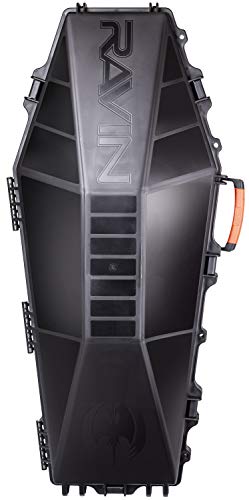
RAVIN Hard Case
This is the most flexible Ravin-focused recommendation in the ranking because its fitted shell supports a documented group of Ravin crossbow families with the scope and quiver attached.

SKB Ravin R5X/R10X Case
This is the focused airport-handling choice for Ravin R5X and R10X owners who want a model-specific protective case with wheels and a pull-out handle.

SKB iSeries Small Bow Case
This is the compact rugged choice for a smaller compatible parallel-limb setup when minimizing case bulk matters but hard-shell sealing and wheeled transport remain priorities.
Measure the travel setup, not just the crossbow
Crossbow fit can change when accessories are installed. A rangefinding scope may have a different profile from a standard optic. A quiver can add width or create a pressure point, and a cocking device can affect the stock area. Even a small change to a mount can alter where the bow sits in fitted foam. Do not rely on a general description such as compact, narrow, or parallel-limb without checking the manufacturer’s compatibility information.
Unload the crossbow completely and place it in a safe condition before measuring or test-fitting it. Record its overall length, widest uncocked span, and maximum height at the optic or other elevated component. Measurements should represent the exact configuration intended for travel. Compare those measurements with the case’s documented usable interior and foam layout, leaving room for cushioning rather than aiming for shell-to-equipment contact.
A dry fit should reveal whether the bow drops naturally into its recess. Close the lid slowly without engaging the latches. If the lid springs upward, rocks, or requires force, stop and locate the interference. A light, even foam impression can show retention; a deep mark at a scope turret, limb edge, or cable indicates concentrated pressure. Never use the latches to compress an obviously incompatible setup into the case.
After closing the empty case and then the properly packed case, compare how each feels when gently tilted. Movement, clunking, or shifting weight indicates that the contents are not adequately retained. Correct the packing with manufacturer-approved foam adjustments or choose a better-fitting case. Loose accessories should not share an open cavity with the bow merely because unused space exists.
Fit check: Test the case with every component you plan to check, including the installed optic and quiver configuration. Repeat the test after any equipment change rather than assuming the old foam layout still works.

Pack the crossbow to protect its vulnerable parts
Begin with the crossbow unloaded and follow the manufacturer’s instructions for uncocking or otherwise placing it in a transport-safe condition. Remove bolts or arrows from the rail and quiver as required for transport. Broadheads should be covered and secured in a rigid container so they cannot cut foam, damage equipment, or expose baggage inspectors to an unprotected edge.
Support the crossbow at strong structural areas identified by the case design. Foam should immobilize the body without loading delicate components. Pay particular attention to the optic, scope mount, limb tips, cams, cables, safety controls, trigger housing, and cocking mechanism. If the case was cut for a different optic or quiver arrangement, do not assume the remaining space is harmless.
Keep dense accessories from becoming projectiles. A rangefinder, binoculars, crank handle, tools, and similar equipment should occupy fitted recesses or separate secured compartments. An item that can leave its recess when the case is inverted can strike the crossbow during normal handling. Small parts are better organized in closed containers than scattered across exposed foam.
Avoid placing documents, straps, or loose fabric across latching surfaces and seals. Before closing the case, inspect the entire perimeter for debris and pinched material. Engage each latch and check that the lid is seated evenly. Apply locks only after confirming the case closes normally without using the locks to pull misaligned halves together.
Take reference photographs of the unloaded, packed crossbow and the closed case before surrendering it. The photographs can help you restore the same arrangement on the return trip and document the pre-flight condition. Keep serial-number records and travel documents separate from the checked case so they remain accessible if the baggage is delayed or inspected.
Safety warning: Airline acceptance does not override firearm, archery-equipment, dangerous-goods, or destination rules. Confirm the carrier’s procedures and all laws that apply at departure, connection, arrival, and return locations. Declare equipment when required, and never pack prohibited items simply because the case has room.
Locks, inspection access, and airline procedures
A case needs closures that remain secure under handling, but the correct locking method depends on the applicable rules and the carrier’s procedure. Do not assume that a product’s TSA-oriented latch compatibility settles how the case must be presented or inspected. Contact the carrier when its published instructions are unclear, arrive with time for inspection, and keep the keys or combinations under your control as required by the governing procedure.
Inspect every lock port before travel. The lock shackle should pass through cleanly without forcing the lid out of alignment. A lock that is too large can snag on equipment, while one that is too small may not capture both sides of the closure correctly. Use the case’s intended locking points rather than improvised holes, straps, or hardware that may interfere with inspection.
Do not use locking points to compensate for an overfilled case. If the shell bows, the latches are under unusual tension, or the seal is visibly uneven, repack. Compression concentrated around an optic can change zero or damage a mount even when the exterior shell shows no obvious harm.
At the airport, follow the carrier’s directions for declaration, inspection, and baggage handoff. Stay with the case until staff indicate that the required inspection process is complete. Connections and international itineraries deserve extra attention because different authorities or carriers may become involved during the trip. Rules for crossbows, arrows, broadheads, tools, lubricants, and related equipment may not be identical.
Wheels, handles, and real-world terminal handling
A wheeled case is most useful when it balances well in the loaded configuration. Pack the case, extend or grasp the intended towing handle, and roll it over a clean surface before leaving home. It should track without persistent twisting, dragging a corner, or allowing internal cargo to migrate toward the wheels. Listen for movement inside after rolling and after crossing a doorway threshold.
Check every carrying handle because wheels do not eliminate lifting. Baggage scales, stairs, vehicle cargo areas, and damaged pavement may require carrying the case. A handle should feel secure with the actual travel load and provide enough clearance for a gloved or large hand. Inspect its attachment points for looseness, cracking, or distortion.
Wheel hardware should rotate freely and remain protected enough to survive incidental impacts. Remove mud, grit, and vegetation after field use so contaminants do not enter the airport or abrade wheel surfaces. If a wheel or pull handle is already binding, repair it before the trip rather than expecting it to improve under load.
A more compact case can be easier to maneuver, but reduced size narrows the range of compatible crossbows and accessory configurations. Never choose a shorter shell solely for convenience unless the complete setup fits without pressing against the ends, lid, or sidewalls. Conversely, an unnecessarily large case can allow movement unless its foam properly retains the crossbow.
Shell, seal, foam, and pressure-valve inspection
Examine the shell under good light. Look for cracks, deep gouges, distorted corners, loose hinge areas, and surfaces that no longer meet evenly. Cosmetic marks may be harmless, but structural damage near a hinge, latch, wheel, or lock point deserves careful attention. Close the empty case and verify that the perimeter aligns before evaluating it with equipment inside.
Clean the seal with methods approved by the manufacturer. Sand, plant material, strands of fabric, and displaced foam can prevent an even closure. A waterproof or water-resistant design still depends on an intact mating surface, and neither description means the case should be intentionally submerged.
Inspect fitted foam for tears, permanent crushing, moisture, or unplanned cuts. Foam that once held a bow securely can loosen after equipment changes or repeated compression. Let a damp case and foam dry according to the manufacturer’s care instructions before long-term storage; sealing moisture beside metal components invites avoidable problems.
If the case has a pressure valve, identify its location and learn its correct operation before reaching the airport. Keep the valve area free of dirt and avoid treating it as a tie-down or lifting point. A valve helps manage pressure differences in a sealed case, but it does not protect against poor fit, loose cargo, or water entering through a damaged seal.
Preflight rule: Any crack, unreliable latch, damaged lock point, missing wheel, compromised seal, or foam interference with the optic should be resolved before the case enters baggage handling.
Preflight evaluation checklist
- Verify that the case documentation names or safely accommodates the exact crossbow model and installed configuration.
- Confirm that the crossbow is unloaded and placed in the manufacturer-directed transport condition.
- Remove and secure arrows or bolts, and place covered broadheads in an appropriate rigid container.
- Check that the optic, limbs, cams, cables, controls, and cocking system do not contact the shell or receive concentrated lid pressure.
- Secure every accessory so it cannot leave its recess when the case is tilted or inverted.
- Inspect the shell, hinge, latches, handles, wheels, lock points, seal, and pressure valve for damage or obstruction.
- Close the lid without force and verify even alignment around the perimeter before locking it.
- Roll and carry the loaded case at home to expose balance, tracking, handle, or internal-shifting problems.
- Review the carrier’s baggage and declaration process for every leg of the itinerary.
- Check applicable requirements at departure, connection, destination, and return locations.
- Keep keys, combinations, records, and travel documents accessible rather than inside checked baggage.
- Photograph the packed arrangement and exterior condition before airport handoff.
Common mistakes when choosing a travel case
Buying by exterior shape alone: Two crossbows that look similarly compact can have different limb geometry, optic height, quiver placement, or cocking hardware. Verified compatibility and an interference-free dry fit matter more than visual resemblance.
Assuming airline-oriented wording guarantees acceptance: Product construction and carrier procedure are separate questions. A well-built case can still be presented incorrectly, packed with a restricted item, or rejected under a carrier-specific rule.
Using loose foam as a universal solution: Random foam blocks can migrate, compress controls, or hide pressure points. Use the fitted layout or manufacturer-approved modifications, and make sure support remains stable when the case changes orientation.
Leaving heavy accessories unsecured: A tool, optic accessory, or crank handle can damage the bow if it escapes its recess. Empty space should not become an unrestrained storage compartment.
Testing the case empty: Wheel tracking, handle comfort, shell flex, and internal movement can change after loading. Evaluate the exact packed configuration rather than judging convenience from an empty display.
Ignoring the return trip: Bring the information and organization needed to repack the case consistently. Regulations, inspection arrangements, and carrier procedures should be checked for the return route as carefully as for departure.
Which crossbow case should you choose?
Choose the top-ranked TenPoint case when you own a supported TenPoint or Wicked Ridge crossbow and want a fitted airline-oriented design with wheels, secure storage, and multiple lock points. It is the strongest all-around match within its stated compatibility range, not a universal case for unrelated crossbows.
Choose the parallel-limb SKB option when that bow geometry matches your setup and you value rolling portability, environmental sealing, lock-oriented hardware, and pressure management. Choose the broader Ravin hard case when your model appears in its documented compatibility group and fitted protection matters more than a terminal-focused pull-handle arrangement.
Ravin R5X and R10X owners who prioritize wheeled terminal movement should consider the dedicated SKB configuration. Travelers with a smaller compatible parallel-limb setup can favor the compact rugged SKB case, provided the complete bow and optic arrangement passes the no-contact fit test.
If none of the documented compatibility information clearly covers your crossbow, do not force a selection from this list. Contact the crossbow or case manufacturer for fit guidance, or use another purpose-built hard case whose interior support is explicitly designed for your complete setup. The best crossbow case for air travel is ultimately the one that fits correctly, closes without compression, secures all contents, survives realistic handling, and complies with the procedures governing the entire trip.
Compare the recommended options
| Product | Best use | Why it stands out | Best fit | Amazon |
|---|---|---|---|---|
|
#1 TenPoint Hard CaseBest overall airline case |
Air travel with a compatible fully assembled TenPoint or Wicked Ridge crossbow. | This is the best broadly useful airline-oriented choice for supported TenPoint and Wicked Ridge crossbows because it combines fitted internal support, protected accessory storage, and wheeled handling. | Choose it if your supported TenPoint or Wicked Ridge setup needs a fitted hard case with substantial organized storage and rolling transport. | View on Amazon |
|
#2 SKB iSeries Parallel Limb CaseBest for parallel limb crossbows |
Flying with a compatible parallel-limb crossbow that fits the custom foam layout. | This case is a strong fit-first choice for compatible parallel-limb crossbows, with travel features that address rolling, locking, environmental exposure, and pressure changes. | Choose it if you have a compatible parallel-limb setup and prioritize a rolling sealed case with TSA-accepted locking-latch compatibility. | View on Amazon |
|
#3 RAVIN Hard CaseBest for broad ravin compatibility |
Fitted hard-shell protection for a documented compatible Ravin crossbow during airline transport. | This is the most flexible Ravin-focused recommendation in the ranking because its fitted shell supports a documented group of Ravin crossbow families with the scope and quiver attached. | Choose it if your Ravin model is included in the documented compatibility group and you want fitted protection with pressure management. | View on Amazon |
|
#4 SKB Ravin R5X/R10X CaseBest wheeled case for ravin r5x r10x |
Rolling a Ravin R5X or R10X with its quiver and accessories through terminals. | This is the focused airport-handling choice for Ravin R5X and R10X owners who want a model-specific protective case with wheels and a pull-out handle. | Choose it if you own a Ravin R5X or R10X and terminal mobility is a major concern. | View on Amazon |
|
#5 SKB iSeries Small Bow CaseBest compact rugged option |
Airline transport of a smaller compatible parallel-limb bow in a more compact sealed case. | This is the compact rugged choice for a smaller compatible parallel-limb setup when minimizing case bulk matters but hard-shell sealing and wheeled transport remain priorities. | Choose it if your smaller compatible setup fits the custom foam and you want less external bulk without moving to a soft case. | View on Amazon |
As an Amazon Associate, ProHuntingHacks may earn from qualifying purchases.