
The best compact crossbow case is one that fully encloses your assembled bow, prevents it from shifting, and fits the way you actually travel. For mixed truck and treestand use, a padded soft case with reliable retention and backpack-style straps is usually the most practical choice. A fitted hard case is better when the bow will ride in a truck bed, travel with heavy equipment, or face rough handling.
Compact does not simply mean small. It means closely matched to a narrow or reverse-limb crossbow without excess material catching on seats, branches, ladder hardware, or other gear. Start with the bow’s widest, longest, and tallest points while its normal hunting accessories are installed. Then choose the protective structure and carrying system that match the hazards between home, vehicle, and stand.
Fast takeaway: Favor a closely fitted soft case for controlled cab transport and longer approaches. Favor a compatible hard case when crushing, shifting cargo, or exposed truck-bed travel is the greater risk. In either case, confirm fit with the scope, quiver, sling hardware, and other normally attached equipment in place.
What Makes a Crossbow Case Compact Without Making It Impractical?
A useful compact case eliminates unnecessary bulk while preserving clearance around vulnerable parts. The limb tips, cams, scope, turret caps, stock, and stirrup should not carry pressure from the closed shell. A case can look tidy from the outside yet be unsuitable if the optic presses into the lid or the limbs must flex against the sidewalls.
Measure the crossbow in its transport configuration rather than relying only on a bow specification sheet. Decide whether the quiver stays attached, note any oversized optic or electronic sight, and include protruding sling swivels or cocking-device components. Measure the actual overall envelope at its longest, widest, and tallest points. Case compatibility lists are valuable, but the installed configuration remains the final authority.
Internal retention matters almost as much as external size. A slightly roomier case with well-positioned straps may protect better than a tight case that forces the bow against the zipper track. The crossbow should remain stable when the closed case is lifted by each intended handle and carried on its shoulder straps. Retention should secure the main structure without pulling on the scope, cables, trigger housing, or other sensitive components.
Truck and treestand travel also demand different forms of compactness. In a vehicle cab, the case must clear doors, consoles, and seat backs. On a wooded approach, it needs to stay close to the body and resist snagging. Near a stand, balanced handling and secure straps become more useful than extra accessory capacity. The most broadly useful option is therefore not necessarily the smallest shell; it is the least bulky case that fits correctly and carries predictably.
Field rule: Never force a zipper, lid, or latch over the optic or limb tips. If closing the case changes the bow’s resting position, the fit is too tight or the accessories need to be rearranged.
How These Compact Crossbow Cases Were Ranked
The ranking prioritizes complete protective cases that contain an assembled crossbow rather than covers, component bags, or accessory sleeves. Fit confidence comes first because padding, pockets, and carrying straps cannot compensate for a shell that contacts the wrong parts of the bow. The next considerations are protection during vehicle transport, retention against internal movement, carrying comfort, exterior durability, and useful storage that does not make the case unnecessarily cumbersome.
The top position goes to the most balanced option for an ultra-narrow crossbow moving between a vehicle and a hunting location. The hard-shell selection ranks next because it addresses a different and more severe transport risk: pressure, moisture exposure, and rough cargo handling. The remaining positions cover hands-free treestand access, modern reverse-limb geometry, and cross-brand narrow-profile fit. This order reflects broad usefulness, not a claim that one case architecture is best for every bow or route.
Compatibility is a pass-or-fail gate throughout the ranking. A model-specific case should be selected only when the bow appears on the manufacturer’s fit guidance and the installed equipment still clears the interior. A case with broader fit guidance requires direct measurement. Water-repellent fabric can help with wet grass and brief exposure, but it should not be treated as a substitute for a sealed shell during prolonged exposure.
Ranking tip: Choose for the harshest repeatable part of your transport routine. Occasional extra walking is usually easier to manage than repeated pressure on an optic or repeated impacts from unsecured truck cargo.
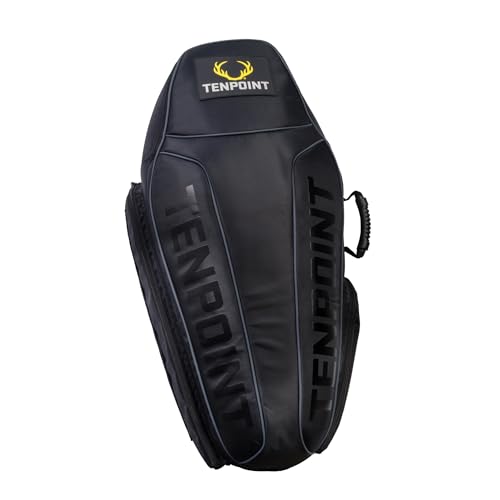
TenPoint Extreme Mini Soft Crossbow Case
This is the most balanced choice for an ultra-narrow crossbow when low-bulk protection and hands-free portability matter equally.
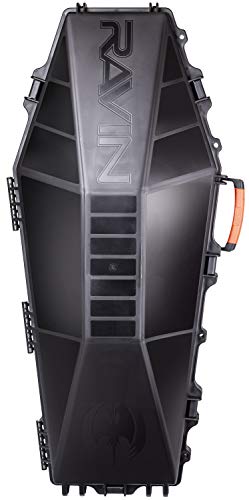
RAVIN Hard Crossbow Case
This fitted hard case offers the strongest transport protection in the group for compatible Ravin crossbows exposed to rough cargo handling.

TenPoint HALO Bowpack
This is the strongest walking-oriented choice for compatible TenPoint crossbows because its framed support and retention system emphasize controlled hands-free carrying.

Muddy Outdoors Mini Compact Crossbow Case
This case is a focused choice for modern reverse-limb geometry, pairing abrasion-resistant construction with stable retention and practical accessory storage.

Killer Instinct Slayer Coffin Crossbow Case
This is the most flexible cross-brand option for a narrow-profile bow that fits its stated limits and benefits from extensive organized storage.
Soft Case, Bowpack, or Hard Case?
A conventional padded soft case is the versatile middle ground. It compresses more easily than a rigid shell, weighs less in the hand, and is easier to position behind a truck seat or carry through cover. It works best when the hunter controls how the case is loaded and can prevent heavy objects from being placed on top. Its main limitations are crush protection and the possibility that loosely packed equipment will press into the bow.
A framed bowpack is designed around the walking portion of the trip. Back support, waist and sternum straps, and external organization can make a noticeable difference when the route includes a long approach, uneven ground, or additional gear. The tradeoff is that added pockets invite overpacking. Excess weight placed far from the back can affect balance, while loose items can rattle at exactly the wrong time.
A hard case is the appropriate tool when the crossbow shares space with stands, toolboxes, coolers, or other dense cargo. A rigid shell and fitted foam provide a stronger barrier against crushing and shifting loads. Seals, pressure-management hardware, and robust latches can also be useful for exposed or changing travel conditions. The costs are greater bulk and less convenient carrying once the route leaves the vehicle.
Do not assume that a hard case is automatically the safest choice. Incorrect foam contact can transmit pressure directly to the scope, turrets, limb tips, or cables. Likewise, a soft case is not automatically inadequate. A correctly fitted padded case, secured inside the cab and kept clear of other cargo, may provide the better overall system for a short drive followed by a long walk.

Fit and Compatibility Checks That Matter
Begin with the bow uncocked, unloaded, and pointed in a safe direction according to the manufacturer’s handling instructions. Remove the broadhead-tipped bolts from the crossbow and place them in a protective container intended for that purpose. The case should never be used to compensate for unsafe transport practices or to bypass applicable vehicle, archery, or wildlife regulations.
Set the bow into the open case exactly as it will travel. Check the limb tips first, followed by the cams or limb assemblies, stock, stirrup, cocking mechanism, scope housing, and adjustment turrets. There should be enough clearance that closing the case does not press on these areas. Pay particular attention to tall optics and attached quivers because they frequently determine whether a nominally compatible case works in practice.
Next, engage the internal straps. They should hold the crossbow’s main body without drawing a strap across cables, controls, or the optic. Close the empty accessory pockets before judging the fit, then add essential equipment gradually. A pocket that bulges inward can eliminate clearance that appeared adequate during the initial check.
Lift the closed case by its top handle, side handle, and shoulder system where provided. Listen and feel for movement. A small amount of soft-case compression is normal, but the bow should not slide from one end to the other or strike the shell. Set the case down gently in the same orientations it may encounter in the vehicle and confirm that the crossbow remains seated.
- Measure the assembled bow in its normal transport configuration.
- Confirm clearance around the optic, limb tips, cams, stirrup, and controls.
- Verify that retention straps contact structural areas rather than cables or accessories.
- Load pockets and check whether their contents intrude into the bow compartment.
- Test every intended handle and shoulder strap for balance.
- Confirm that the case fits its planned location inside the vehicle.
- Check the route’s legal transport and access requirements before departure.
Truck Transport: Control the Case and the Cargo
The safest location is generally the most protected position where the case can be secured against sliding, tipping, and falling objects. Inside a cab, keep it clear of pedals, controls, and passenger movement. Do not leave it standing unsecured against a seat where abrupt braking can send it forward. Use the vehicle’s appropriate cargo-control points rather than relying on friction between the case and upholstery.
In a covered cargo area, separate the crossbow from climbing sticks, stand components, fuel containers, hand tools, and other hard-edged equipment. A padded case protects against routine bumps; it does not turn the bow into a load-bearing platform. Avoid stacking gear on the scope area even when the exterior appears firm.
Truck-bed transport increases exposure to water, grit, vibration, and shifting cargo. This is where a compatible hard case earns its bulk. Secure the case so it cannot slide into the tailgate or bed walls. A water-resistant or sealed design still needs inspection after travel because moisture can enter when the lid is opened, transfer from wet equipment, or remain trapped from an earlier trip.
Safety warning: Follow all crossbow-manufacturer instructions and applicable transport laws. Keep the crossbow uncocked and unloaded during transport, secure projectiles separately as required, and never treat a soft or hard case as permission to handle a loaded crossbow casually.
Treestand Access: Carry Quietly and Keep Your Hands Free
The walk to a stand changes the priority from cargo resistance to control, balance, and snag prevention. Backpack straps are valuable because they leave the hands available for maintaining balance and managing other equipment. Adjust them before entering the woods. A case hanging too low can strike the backs of the legs, while one sitting too high can catch branches or interfere with head movement.
Loose zipper pulls, buckles, and pocket contents are common noise sources. Secure zipper pulls so they cannot tap together, tighten unused strap ends, and place hard accessories in padded organizers. Carry only the items that belong with the crossbow. A large exterior pocket can be convenient, but filling every pocket works against the reason for choosing a compact case.
At the tree, remove the case before climbing. Use an approved haul line and follow the stand and crossbow manufacturers’ procedures for raising equipment. The case’s carry handle may be useful for ordinary handling, but do not assume every loop, strap, or pocket attachment is engineered as a lifting point. Keep the unloaded crossbow controlled and make sure broadheads cannot contact fabric, cord, bark, or the hunter.
A camouflage shell may reduce visual contrast, but it does not replace careful placement. Set the case where it will remain dry, quiet, and out of the walking path. Before leaving, account for all accessories and confirm that no straps can catch on steps or climbing hardware.
Quiet-access rule: Pack and adjust the case at home, then walk a short test route with the same layers and equipment you expect to carry. Fix rattles and balance problems before low light makes them harder to diagnose.
Durability and Weather Protection Without Marketing Guesswork
Exterior fabric should resist abrasion from truck interiors, bark, and brush, but fabric ratings alone do not describe the entire case. Seams, zipper tracks, handle attachment points, strap anchors, and the floor of the case often reveal more about likely service life. Inspect these areas periodically for pulled stitching, exposed padding, bent zipper sliders, or delamination.
Water-repellent soft shells are intended to resist ordinary moisture exposure, not immersion or indefinite rain. If the case becomes wet, remove the crossbow in a dry place, wipe down equipment according to its manufacturer’s instructions, empty the pockets, and allow the case to dry fully while open. Storing damp fabric around steel fasteners, optics, and strings creates avoidable problems.
Hard cases need maintenance as well. Keep sealing surfaces free of grit, inspect latches for full engagement, and make sure foam has not compressed into a shape that lets the bow move. If the case includes a manual pressure valve, use it according to the manufacturer’s instructions rather than treating it as a drain or routine ventilation port.
Padding should be judged by placement and recovery, not merely by thickness. Press gently on high-contact areas and confirm that the material returns to shape. Flattened padding near the scope or limb tips indicates that the case may be carrying pressure where clearance is needed. Internal straps should remain adjustable and should not develop hook surfaces that can abrade strings, cables, or fabric.
Common Buying Mistakes
- Buying from the crossbow’s name alone: Different optics, quivers, and accessories can change the required interior envelope even when the base bow is listed as compatible.
- Choosing the tightest possible dimensions: A close fit is useful only when sensitive parts remain free from pressure and the zipper or lid closes naturally.
- Treating water-repellent fabric as waterproof storage: Soft shells reduce exposure but still require sensible placement and thorough drying.
- Ignoring internal movement: Excess room without effective retention allows the crossbow to gather momentum before an impact.
- Overloading exterior pockets: Bulging pockets can press inward, upset carrying balance, and create noise.
- Using a walking case for unmanaged truck-bed cargo: Padded fabric cannot provide the crush resistance of a compatible rigid shell.
- Assuming every strap is a haul point: Carry systems and pocket loops may not be intended for lifting equipment into a stand.
- Leaving the case wet or dirty: Trapped moisture and grit can affect fabric, foam, hardware, and the equipment stored inside.
How to Choose Among the Ranked Cases
Choose the top-ranked ultra-compact soft case when your crossbow fits its specified format and your routine combines controlled vehicle transport with meaningful walking. It offers the most balanced approach to reduced bulk, internal restraint, weather-repellent fabric, accessory organization, and hands-free carrying.
Choose the fitted hard case when a compatible Ravin crossbow will ride near heavy cargo, travel in a truck bed, or face repeated rough handling. Its rigid construction is the stronger choice for crush resistance, but confirm model compatibility and plan for the additional bulk before assuming it will work well on a long approach.
Choose the framed bowpack when access to a treestand or ground blind is the dominant challenge and your compatible TenPoint model needs a supportive carrying system. It is particularly relevant when waist and sternum control matter more than compact storage inside a crowded cab. Resist the temptation to fill every exterior attachment point.
Choose the reverse-limb case when that geometry is the central fit problem and you want durable fabric, stable retention, several practical grab points, and organized exterior storage. Measure the complete setup rather than assuming every reverse-limb design shares the same envelope.
Choose the broad-fit narrow-profile case when you need flexibility across brands and your assembled crossbow falls within its stated fit guidance. This is the logical route when dedicated model compatibility is unavailable, provided your direct measurements leave safe clearance around the optic and limbs.
If none of the fit guidance matches your assembled bow, do not select the closest case and hope the padding will compensate. Use the bow manufacturer’s approved case, seek a properly fitted alternative, or transport the bow with another lawful protective system designed for its exact configuration. Correct fit is the first requirement; carrying features and storage are refinements after that requirement is satisfied.
Compare the recommended options
| Product | Best use | Why it stands out | Best fit | Amazon |
|---|---|---|---|---|
|
#1 TenPoint Extreme Mini Soft Crossbow Casebest overall compact case |
Transporting an ultra-narrow crossbow in a truck and carrying it on longer approaches. | This is the most balanced choice for an ultra-narrow crossbow when low-bulk protection and hands-free portability matter equally. | Choose it if you use a compatible ultra-narrow crossbow and want a soft case that avoids the bulk of a traditional design. | View on Amazon |
|
#2 RAVIN Hard Crossbow Casebest hard case for truck transport |
Protecting a compatible Ravin crossbow in a truck bed or around heavy equipment. | This fitted hard case offers the strongest transport protection in the group for compatible Ravin crossbows exposed to rough cargo handling. | Choose it if maximum vehicle protection matters more than low weight or easy backpack-style carrying. | View on Amazon |
|
#3 TenPoint HALO Bowpackbest treestand-access bowpack |
Carrying a compatible TenPoint crossbow and organized hunting gear to a treestand or ground blind. | This is the strongest walking-oriented choice for compatible TenPoint crossbows because its framed support and retention system emphasize controlled hands-free carrying. | Choose it if the approach to your stand is the hardest part of the trip and your TenPoint crossbow is listed as compatible. | View on Amazon |
|
#4 Muddy Outdoors Mini Compact Crossbow Casebest for compact reverse-limb crossbows |
Transporting a modern reverse-limb crossbow that fits the case’s compact profile. | This case is a focused choice for modern reverse-limb geometry, pairing abrasion-resistant construction with stable retention and practical accessory storage. | Choose it if reverse-limb compatibility is your primary concern and you prefer a durable soft-sided case. | View on Amazon |
|
#5 Killer Instinct Slayer Coffin Crossbow Casebest broad-fit narrow-profile case |
Carrying a narrow-profile crossbow when broad brand compatibility is more useful than model-specific fit. | This is the most flexible cross-brand option for a narrow-profile bow that fits its stated limits and benefits from extensive organized storage. | Choose it if your narrow-profile crossbow fits the stated envelope and you need flexible storage and multiple carrying options. | View on Amazon |
As an Amazon Associate, ProHuntingHacks may earn from qualifying purchases.