
The best bipod for a deer hunting rifle is one that fits the rifle without a questionable adapter, deploys quietly from your likely shooting position, and provides enough height and terrain adjustment without making the rifle unpleasant to carry. For an M-LOK rifle, the strongest all-around choice in this group combines one-handed operation with controlled pan and tilt. Hunters carrying a conventional stocked rifle may instead be better served by a lighter sling-stud model, while steep terrain, hard surfaces, and tall vegetation each favor different configurations.
Match the bipod to the rifle and the hunt
Start with the attachment point already present on the rifle. M-LOK slots, a forend sling-swivel stud, and a Picatinny rail are different interfaces. A bipod that mounts directly to the rifle is generally preferable to a stack of loosely fitted adapters because there are fewer connections to shift, rattle, or interfere with the support hand. Confirm not only the interface type but also that the chosen mounting location leaves enough room for the bipod body, folded legs, sling, and magazine.
Next, identify the position from which a realistic deer shot is most likely. A low bipod works well from open, closely cropped ground, but it can force the muzzle into grass or leaves when vegetation is higher. A taller bipod provides clearance and can accommodate a higher prone position, although raising the rifle also raises its center of gravity. Hunters who expect both flat and sloped ground should give extra weight to independent leg indexing, cant, and positive controls that can be operated without looking away from the field.
Carried weight matters most when the bipod remains attached throughout a long walk. Weight mounted near the front of a rifle changes how quickly it comes to the shoulder and how steadily it can be held offhand. That does not make the lightest option automatically best: a mobile hunter may value low weight, while a hunter watching a field edge from a fixed position may accept more mechanism in exchange for broader adjustment.
Field rule: Choose the mounting interface first, then choose working height and movement. Do not select a bipod for its adjustment features until you know it attaches securely to the rifle you intend to carry.
How the five bipods were ranked
The ranking gives the most weight to secure attachment, useful field adjustment, practical deployment, and suitability for common deer-hunting positions. The leading option earns its place through a balanced combination of low-profile construction, one-handed leg operation, forward-loading capability, and tool-free pan-and-tilt control. It is the broadest fit for a hunter whose rifle already has the appropriate direct-mount interface.
The remaining positions are not simply lesser versions of the first. The second pick prioritizes minimum carried weight on a conventionally stocked rifle. The third emphasizes leveling during low shots on uneven ground. The fourth favors adaptable leg geometry, broad horizontal movement, and interchangeable footing on a rail-equipped rifle. The fifth trades some low-position compactness for additional clearance in vegetation or a naturally higher prone stance.
Durability was considered alongside handling rather than in isolation. Aluminum, steel components, protected mechanisms, non-marring contact surfaces, and secure feet are useful only if the complete bipod remains manageable in the field. Controls should lock positively, avoid snagging during a sling carry, and be understandable under stress. A feature-rich bipod ranks poorly for a particular hunter if its interface, height, or deployment method does not suit that hunter’s rifle and terrain.

Magpul MAGBP M-LOK Bipod
A balanced field choice for compatible rifles because it combines low-profile construction, one-handed adjustment, forward-loading capability, and tool-free movement control.

Magpul MOEBP Sling-Stud Bipod
This is the carry-focused option for a traditional sling-stud setup, with low weight, a compact folded profile, and straightforward leg deployment.
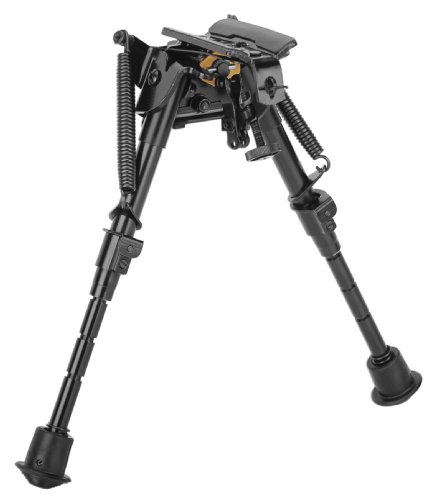
Caldwell 247142 XLA Pivot Bipod
Its low working range, indexed legs, and cant adjustment make it a focused choice for prone shooting where the ground is not level.

UUQ Picatinny Quick-Detach Bipod
This is the most configuration-focused selection, pairing direct rail attachment with broad movement, multiple leg positions, and surface-specific feet.

CVLIFE FBA_US0306 Tall Bipod
The taller adjustment range makes this the practical choice when vegetation or body position prevents effective use of a low prone support.
Choose the right mounting system
An M-LOK bipod is a logical choice when the rifle has compatible slots in a suitably reinforced section of the forend. Direct attachment keeps the installation compact and avoids occupying a separate rail section. Before mounting, unload the rifle, remove the magazine where applicable, open the action, and verify the chamber is empty. Follow the rifle and bipod manufacturers’ instructions for fastener placement and tightening. Also check that no screw projects far enough to contact the barrel, gas system, or another internal component.
A sling-stud bipod suits many traditional deer rifles because the mounting point is already present beneath the stock. Inspect the stud and surrounding stock material before relying on it. A loose stud, compressed wood, cracked synthetic material, or deformed mounting hardware is a reason to stop and correct the installation. The bipod saddle should bear evenly against the forend without gouging the finish. If the original stud also carried the sling, verify that the mounted bipod preserves a safe sling connection or plan a different carry method.
A Picatinny-mounted bipod works well on rifles equipped with a correctly installed rail. It can offer repeatable positioning and fast removal, but only when the rail and clamping surfaces are dimensionally compatible and free of debris. Seat the mount consistently against the same rail surface, engage the locking mechanism fully, and test for movement by hand before loading the rifle onto the legs.
Safety check: Never diagnose a loose mount with a loaded rifle. Unload and clear the firearm before adjusting fasteners, changing feet, moving an adapter, or inspecting the forend.
Working height changes more than comfort
Low bipods usually provide the most stable geometry when the ground is clear and the shooter can settle naturally behind the rifle. They keep the rifle closer to the ground and reduce the leverage applied to the mounting point. The drawback is clearance. Grass, crop residue, fallen leaves, snow, and small rises between the muzzle and the animal can obstruct the sight line even when the deer appears clear through the optic.
A model extending from 6 to 9 inches is oriented toward low prone shooting. That range can work well on short cover or a prepared field edge, especially when cant helps level the rifle on a side slope. A 7-to-10-inch design gives slightly more room for the chest and elbows while remaining relatively compact. A 9-to-13-inch bipod is the more suitable choice when low vegetation, uneven hummocks, or a higher body position would otherwise crowd the shooter.
Height should be tested with the exact clothing and pack likely to be used. A heavy jacket changes shoulder position, while a pack worn on the chest or used beneath the torso can prevent the shooter from getting as low as expected. Extend only as much leg as necessary. Maximum extension may clear vegetation, but it also narrows the margin for controlling wobble if the body is poorly aligned.

Setup tip: Test the lowest usable setting and one higher setting from a safe dry-fire position. The better setting is the one that clears the foreground while allowing the shoulders, neck, and trigger hand to remain relaxed.
Pan, cant, and leg angle solve different problems
Cant lets the rifle roll relative to the bipod so the reticle can be leveled when one foot sits higher than the other. It is valuable on hillsides, plowed ground, and uneven forest floors. A cant mechanism should move smoothly enough for correction but lock firmly enough that the rifle does not roll as pressure is applied. The low-position sling-stud choice in this ranking provides 18 degrees of bidirectional cant, while the adaptable Picatinny option provides 30 degrees of cant.
Pan permits horizontal aiming without picking up and relocating both feet. It can help when a deer walks across an opening, but excessive freedom can make the rifle feel vague. The leading M-LOK option provides 40 degrees of total pan along with 50 degrees of total tilt, controlled through a tool-free locking knob. The adaptable Picatinny selection provides 180 degrees of pan. Hunters should treat those ranges as control envelopes, not as substitutes for rebuilding a compromised position. If the torso becomes twisted or the bipod is loaded sideways, reset behind the rifle.
Multiple leg angles address obstacles and unusual surfaces. Legs positioned forward or backward can change clearance around rocks, roots, blind walls, or a sharply sloped bank. The Picatinny selection offers five leg positions as well as five length detents. More positions create more setup choices, so practice the controls before hunting. Under pressure, a simpler bipod that the hunter understands is more useful than a highly adjustable one deployed incorrectly.
Feet, loading, and surface conditions
Rubber feet are versatile on rock, wood, compacted soil, and other surfaces where grip matters and sharp points could skate or cause damage. Spike feet can bite into soft ground but may be noisy on stone and inappropriate on finished blind floors. The adaptable Picatinny pick includes interchangeable rubber and spike feet, making it the most surface-oriented option in the ranking. Change feet before entering the field rather than handling small retention parts at a shooting position.
Forward loading means applying controlled shoulder pressure so the bipod legs are preloaded rather than merely resting beneath the rifle. The goal is repeatable contact, not forcing the rifle forward until the legs flex or the mount shifts. The leading option is documented for stabilizing forward tension. With any bipod, watch the reticle while pressure is added. If the sight picture jumps, a foot slides, or the stock twists, reduce pressure and rebuild the position.
Soft ground can allow narrow feet to sink unevenly. Snow, mud, loose leaves, and duff can hide hard objects beneath one leg. Set the feet deliberately, press down enough to discover unstable material, and check level before committing to the shot. On a hard surface, listen for scraping or tapping that could alert nearby deer. A folded bipod should also be checked for contact with sling swivels, the stock, or other hardware that can produce noise while walking.
Field rule: Stability begins at the feet. If either foot is sliding, sinking, perched on loose debris, or contacting a resonant blind floor, reposition before refining the aim.
How to evaluate a bipod before deer season
Mount the bipod according to the manufacturer’s instructions, then perform the first inspection with the rifle unloaded. Confirm that the attachment does not shift when the legs are folded, deployed, or gently loaded. Cycle each control repeatedly. Leg buttons should return, detents should engage cleanly, and the cant or pan lock should hold its setting without requiring improvised tools.
- Verify that the mounting interface matches the rifle and that every locking surface is fully engaged.
- Check barrel clearance and make sure mounting hardware does not contact internal rifle components.
- Deploy and stow the legs while wearing hunting gloves and while keeping the muzzle in a safe direction.
- Test the rifle at the lowest useful height, a middle setting, and the highest setting you expect to need.
- Place the feet on packed soil, soft ground, and a hard surface to learn how each condition changes grip and noise.
- Load the bipod gently and watch for stock flex, mount movement, leg slippage, or a shifting point of aim.
- Confirm that folded legs do not obstruct the support hand, sling, magazine, or safe operation of the rifle.
- Fire from realistic field positions and compare point of impact with the rifle’s established zero.
- Reinspect the mount after firing and after carrying the rifle on its sling.
Practice should include abandoning the bipod. Deer do not always appear where the ground permits a prone position. The hunter should be able to fold the legs safely and transition to a kneeling, seated, tree-supported, or pack-supported position. A bipod is one support option, not permission to force every shot into the same posture.
Handling, maintenance, and quiet deployment
Dust and grit tend to collect around leg detents, pivots, foot interfaces, and clamping surfaces. Brush away loose debris after a hunt and follow the manufacturer’s maintenance directions rather than flooding the mechanism with lubricant. Excess oil can attract dirt and migrate onto the stock or other equipment. Inspect springs, buttons, screws, and feet for damage before the next trip.
Quiet deployment is partly a product characteristic and partly a practiced skill. Control spring-tensioned legs instead of letting them snap against their stops. Keep fingers clear of pivots, lower each foot onto the ground, and avoid dragging the bipod across rock or a blind ledge. Rehearse from both sides of the rifle if terrain might force an awkward setup.
Carry balance deserves a realistic test. Walk with the rifle unloaded in the same sling orientation used during a hunt. Check whether folded legs strike clothing, catch brush, or press into the back. Then shoulder the rifle from a safe carry and note whether the extra front-mounted mass changes muzzle control. A bipod that is stable on the range but consistently removed for every walk may not suit a mobile hunting style.
Common bipod buying mistakes
The first mistake is treating every forend attachment as interchangeable. A sling stud is not an M-LOK slot, and a Picatinny rail is not automatically present merely because a rifle has an accessory mount. Verify the physical interface on the exact rifle rather than relying on a general model-family description.
The second mistake is choosing minimum height based on a clean shooting bench. Field vegetation often requires more clearance, while steep uphill or downhill angles alter the space needed beneath the chest and rifle. At the opposite extreme, choosing the tallest bipod as a precaution can add instability and make a low prone position unnecessarily awkward.
Another mistake is assuming pan and cant are the same. Pan follows lateral movement; cant levels the rifle on a slope. Hunters on uneven ground may need cant even if they rarely track horizontally. Hunters overlooking a broad opening may value pan, but they still need a lock that can be set firmly for the shot.
Finally, do not ignore the non-commercial alternative. A backpack, rolled jacket, natural log, or supported kneeling position may be more appropriate when the rifle lacks a sound mounting point or when the hunt involves dense cover and frequent offhand handling. Any natural rest must permit a safe muzzle direction and a clear line of fire, and the barrel should not rest directly on a hard object.
Which deer-rifle bipod should you choose?
Choose the first-ranked M-LOK bipod when you want the most balanced combination of field adjustment, one-handed deployment, and controlled pan and tilt on a compatible rifle. Choose the second-ranked sling-stud model when minimizing carried weight and folded bulk matters more than having a pan-and-cant mechanism.
Choose the third-ranked option for a conventionally stocked rifle used mainly from low prone positions on sloping ground. Its notched legs and cant capability directly address uneven terrain. Choose the fourth-ranked Picatinny model when changing surfaces, leg geometry, and horizontal aiming range are central concerns, and when you are willing to learn a broader set of controls.
Choose the fifth-ranked sling-stud bipod when foreground clearance or a naturally higher prone posture makes shorter supports restrictive. If no ranked option fits the rifle’s interface securely, do not improvise an attachment simply to use a bipod. Use a safe field rest or have the rifle evaluated for a purpose-built mounting solution instead.
Fast takeaway: Interface determines whether the bipod belongs on the rifle; terrain determines the useful movement; vegetation and body position determine height. Make those decisions in that order, then verify the complete setup at the range before carrying it on a deer hunt.
Compare the recommended options
| Product | Best use | Why it stands out | Best fit | Amazon |
|---|---|---|---|---|
|
#1 Magpul MAGBP M-LOK Bipodbest overall M-LOK bipod |
Fast, flexible field adjustments on an M-LOK-equipped deer rifle. | A balanced field choice for compatible rifles because it combines low-profile construction, one-handed adjustment, forward-loading capability, and tool-free movement control. | Choose this for an M-LOK-equipped deer rifle when balanced adjustment and streamlined field handling are the priorities. | View on Amazon |
|
#2 Magpul MOEBP Sling-Stud Bipodbest lightweight sling-stud bipod |
Minimizing carried weight on a conventionally stocked hunting rifle. | This is the carry-focused option for a traditional sling-stud setup, with low weight, a compact folded profile, and straightforward leg deployment. | Choose this for a mobile hunter using an Uncle Mike's sling swivel stud who wants to limit front-end weight and folded bulk. | View on Amazon |
|
#3 Caldwell 247142 XLA Pivot Bipodbest for uneven prone terrain |
Leveling a rifle during low-position shots on sloped ground. | Its low working range, indexed legs, and cant adjustment make it a focused choice for prone shooting where the ground is not level. | Choose this for a sling-stud rifle used primarily from low prone positions on uneven ground. | View on Amazon |
|
#4 UUQ Picatinny Quick-Detach Bipodbest adaptable Picatinny bipod |
Adjusting support geometry and footing across changing field surfaces. | This is the most configuration-focused selection, pairing direct rail attachment with broad movement, multiple leg positions, and surface-specific feet. | Choose this for a Picatinny-equipped rifle when surface changes, unconventional leg angles, and broad aiming movement matter most. | View on Amazon |
|
#5 CVLIFE FBA_US0306 Tall Bipodbest taller field bipod |
Gaining additional clearance for higher prone positions or field vegetation. | The taller adjustment range makes this the practical choice when vegetation or body position prevents effective use of a low prone support. | Choose this for a sling-stud rifle when grass, uneven cover, or shooting posture requires more ground clearance. | View on Amazon |
As an Amazon Associate, ProHuntingHacks may earn from qualifying purchases.