
The best archery target for a backyard compound bow is a stable, weather-resistant target rated above your bow-and-arrow setup’s expected speed and approved for the point type you intend to shoot. For frequent field-point practice, the Delta McKenzie Speedbag model 79024 is the strongest all-around choice here because it combines a generous dual-sided face, a 475 FPS rating, visible aiming references, and relatively easy arrow removal. Broadhead tuning, portable setup, longer-range visibility, and realistic hunting practice call for different target designs, so the right choice depends on more than stopping power alone.
Start with point compatibility and a safe shooting lane
First decide whether the target will receive field points, broadheads, or both. A bag target can be an excellent option for high-volume field-point shooting, but a field-point-only label is a hard limit. Broadheads can cut internal material, damage the cover, become trapped, or make removal hazardous when used in a target not designed for them. If hunting-head practice is part of your preseason routine, select a foam target explicitly approved for the broadhead style you use.
The target’s speed rating also needs to cover the complete shooting system, not merely the bow advertised on the limb or riser. Arrow mass, draw length, draw weight, bow efficiency, and string accessories all affect actual arrow speed. Published bow specifications are not a substitute for the target manufacturer’s limitations. When the setup is uncertain, verify arrow speed with appropriate equipment or obtain help from a qualified archery shop before shooting.
Safety comes before target selection: A target is not a backstop. Build the range so a miss, pass-through, deflection, or equipment failure cannot send an arrow toward a home, road, trail, animal, or neighboring property. Follow local discharge rules, inspect the lane before every session, and stop immediately if anyone enters the exclusion area.
For the broadest field-point use, prioritize stopping margin, a face large enough for your realistic shooting distance, and manageable arrow removal. For occasional broadhead confirmation, prioritize compatible foam and accept that broadheads generally create more target wear. A realistic animal target is useful for shot-angle and anatomical-placement drills, but it should supplement—not replace—a forgiving target used for form work and tuning.
How the five targets were ranked
The ranking begins with compound-bow compatibility and the target’s ability to serve as a complete, shootable backyard target. Accessories, replacement cores, covers, stands, and backstops are not substitutes for the target itself. After that threshold, the most important criteria are approved point types, published arrow-speed rating, useful aiming area, resistance to outdoor exposure, stability, portability, and the effort required to remove arrows.
The top position goes to the most broadly useful option rather than the most specialized design. The next positions address distinct needs: broadhead compatibility, self-standing convenience, a larger visible shooting face, and realistic hunting-oriented practice. This prevents a specialized feature from being mistaken for universal superiority. A foam block may be the correct choice for broadheads, for example, while a durable bag can be better for repeated field-point groups.
Durability was considered in terms of design and intended use, not promises of an exact service life. Target life varies with arrow diameter, point style, impact concentration, exposure, shooting volume, and whether the archer rotates aiming zones. No reputable ranking can turn those variables into a dependable shot count for every backyard.

Delta McKenzie Speedbag 79024
This durable dual-sided bag is the strongest broadly useful choice for frequent backyard field-point practice with high-speed compound bows.
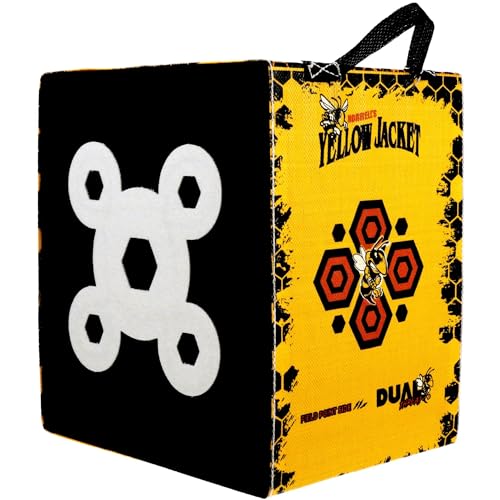
Morrell Yellow Jacket Dual Threat 273
This fused-cellular-foam target is the practical specialist for archers who need one compact target for practice points and hunting broadheads.

Delta McKenzie Wedgie 79656
This wedge-shaped bag simplifies recurring backyard setup by standing upright without a separate target stand.
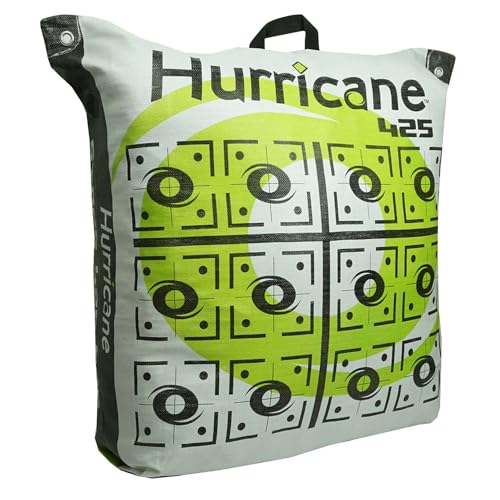
Hurricane H28 H60800
This large-format bag is the best fit when visibility and a generous aiming surface matter more than compact storage.

Delta McKenzie Howling Coyote 59535
This lifelike foam target adds anatomy and scoring references for hunting-oriented practice with multiple approved point types.
Bag, foam, or three-dimensional target?
Bag targets are usually the practical choice for repeated field-point practice. Their internal fill can stop fast arrows while allowing easier extraction than some dense foam designs. They also provide broad, flat faces that work well for groups, sight checks, and form drills. The tradeoff is strict point compatibility: broadheads should never be fired into a field-point-only bag, even for a single confirmation shot.
Foam targets are the more versatile route when their documentation explicitly approves both field points and broadheads. Broadhead blades cut their way into the material rather than pushing through bag fill, making the target suitable for confirming hunting-arrow flight. That versatility does not make foam immune to damage. Repeatedly striking one aiming point can carve a channel, and pulling a broadhead backward through the target can enlarge the wound path or damage the head.
A three-dimensional target introduces anatomy, posture, and less uniform shot presentations. It can reveal whether an archer understands where the vital zone sits rather than merely whether the pin can be held on a bright bullseye. It is also less forgiving of misses around narrow body sections. Give it the same protected lane and backstop planning you would use for any other target, with additional margin around the silhouette.
Field rule: Use field points for volume and broadheads for limited confirmation. Broadhead groups accelerate wear, can damage arrows that strike one another, and add handling risk without improving the value of every routine practice end.
What the published specifications mean in practice
An arrow-speed rating is a compatibility ceiling, not a promise that every arrow will stop under every condition. A worn impact channel, a damaged cover, an unusually small-diameter shaft, a degraded core, or repeated hits in one location can reduce effective stopping performance. Maintain a margin rather than treating the rating as a challenge.
The Delta McKenzie Speedbag model 79024 is rated to 475 FPS and has a 24-by-24-inch face with 10-inch depth. Its 45-pound weight favors stability but makes it more suitable for a semi-permanent station than a target carried casually for every short session. Its field-point-only limitation is the main reason to route broadhead users elsewhere.
The Delta McKenzie Wedgie model 79656 is rated to 425 FPS and measures 20 by 20 by 10 inches. Its wedge geometry removes the immediate need for a separate stand, while its 19-pound weight and sewn-in handle suit a target that moves between storage and the shooting lane. It remains a field-point target.
The Hurricane model H60800 uses a 28-by-28-inch face with 12-inch depth and is rated to 425 FPS. The larger presentation can be easier to acquire against a visually busy backyard, particularly when the target is moved farther downrange. The off-center deer-vital layout on the reverse also helps distribute impacts rather than placing every group through the same central channel.
The Morrell model 273 is rated to 350 FPS and explicitly supports field points, fixed blades, and mechanical broadheads. The Delta McKenzie model 59535 also supports those point categories and is rated for compound bows up to 350 FPS. These are the specialized choices when hunting-head practice is a real requirement rather than a hypothetical possibility.
Match the target to the way you actually practice
A high-volume backyard routine usually begins with blank-bale work, controlled groups, and sight confirmation using field points. In that setting, a broad face and easy extraction reduce fatigue and keep attention on execution. The Speedbag is the most complete fit for that pattern, while the Wedgie is preferable when the target must be placed and removed without arranging a separate stand.
Broadhead confirmation is a different task. Its purpose is to verify that the hunting arrow and chosen broadhead fly predictably relative to the field-point setup. Select the Morrell foam target when a compact, conventional aiming block fits the lane. Select the coyote target when anatomical visualization and varied shot placement matter more than having a simple square face.
The Hurricane is useful when visibility and surface area dominate the decision. A larger face does not excuse a marginal backstop, but it can make aiming zones easier to distinguish and provide more room to rotate impact locations. It can also be a sensible shared target when archers with different confidence levels use the same controlled range.

Whatever configuration you choose, place the target so arrows enter as close to perpendicular to the face as the drill allows. Severe angles increase the chance of glancing impacts, particularly near edges. Keep the target square to the shooting position for tuning and basic accuracy work; reserve angled presentations for deliberate hunting drills conducted within a properly protected lane.
Set up a backyard range that contains mistakes
Begin with local law and property boundaries. Rules governing bow discharge can differ by city, county, neighborhood, lease, or homeowners association. Permission to shoot on private land does not erase the obligation to prevent arrows from leaving it. If the site cannot safely contain a complete miss, use a formal range instead.
Choose a shooting direction with the safest natural termination available. A substantial earthen bank can be useful when it is free of rocks, hard debris, pathways, and erosion hazards, but site-specific suitability still requires judgment. Fences, brush, tarps, siding, and ordinary garden materials are not dependable arrow stops. A purpose-designed backstop should be installed and maintained according to its own instructions, with enough protected area to account for misses around the target.
- Confirm the entire lane and the area beyond it are clear before nocking an arrow.
- Keep people and pets behind the shooting line until the bow is made safe.
- Place the target on firm footing so it cannot rock, twist, or fall during impact.
- Inspect the target face, seams, core, frame, and rear surface before each session.
- Use only point styles expressly approved for that target.
- Stop shooting any area that shows deep channels, soft spots, torn seams, or pass-through risk.
- Retrieve arrows only after every shooter has stopped and acknowledged the range is cold.
Practical safeguard: Establish a spoken range command for starting and stopping. Backyard familiarity encourages shortcuts; a simple command system keeps retrieval, pets, visitors, and interrupted shooting from becoming ambiguous.
Use a repeatable evaluation before trusting a new target
Read the target instructions before the first shot. Confirm the allowed bow types, arrow-speed limit, point restrictions, recommended shooting orientation, and any stand or anchoring requirements. Inspect each arrow as well. A cracked carbon shaft, bent component, loose point, or damaged nock can create a hazard regardless of the target’s rating.
Start closer than your normal practice position only if that distance remains consistent with the manufacturer’s directions and your safe lane design. Use a low-risk aiming zone away from edges and existing damage. Shoot a small group rather than immediately concentrating many arrows into one spot. Then make the bow safe and examine penetration from the side and rear without standing in front of embedded arrows.
Look for adequate stopping depth, stable target position, intact seams or foam, and sufficient shaft remaining for controlled extraction. If penetration appears excessive, do not continue simply because no arrow has passed through yet. Reassess orientation, target condition, arrow compatibility, and the setup’s speed. A backstop remains necessary, but it should not be used to disguise an unsuitable or worn-out primary target.
Evaluate removal effort with the target supported and your hands clear of other nocks and broadhead blades. Pull field-point arrows in line with the shaft rather than bending them sideways. Follow the manufacturer’s removal procedure for broadheads; do not improvise around exposed blades. If a point separates inside the target, stop using that impact area until the obstruction is safely resolved.
Fast takeaway: Trust observed condition over appearance. A target can look tidy around the outer face while repeated central impacts have weakened the internal stopping path.
Extend target life without compromising safety
Rotate among the printed aiming zones instead of drilling every arrow through the center. On a dual-sided design, use both approved faces and follow the manufacturer’s orientation guidance. Spreading impacts reduces channel formation and makes practice more useful by requiring deliberate pin placement rather than an automatic hold on one worn spot.
Protect the target from unnecessary exposure. Weather-resistant does not mean maintenance-free or suitable for indefinite exposure to standing water, ground moisture, wind-driven debris, and ultraviolet light. Store the target under cover when practical and allow a wet target to dry according to its care instructions. Do not wrap a damp target in a way that traps moisture.
Move a heavy bag by its intended lifting points, not by arrows, loose fabric, or target-face material. Before shooting, ensure handles and straps cannot hang across the impact zone. With a self-standing wedge, check that the base is fully supported and that uneven soil does not cant the face toward an unsafe direction.
Retire a target when it can no longer stop compatible arrows consistently, when its structure cannot remain stable, or when damaged material exposes a hazardous removal path. Adding improvised layers to the face can alter arrow behavior and obscure internal failure. Replacement should be based on condition rather than a hoped-for shot count.
Common mistakes when choosing a compound-bow target
Treating the speed rating as the only criterion. Stopping capability matters, but a target that rejects your point type or does not fit the lane is still wrong. Compatibility, condition, face size, and safe containment work together.
Using broadheads in a field-point bag. This can cut the cover and fill, trap blades, and shorten target life. Choose the Morrell model 273 or Delta McKenzie model 59535 when broadhead use is required.
Buying for hypothetical versatility. If nearly all practice uses field points, a purpose-built bag may offer a more convenient daily experience than a broadhead-compatible target. Choose for the routine you will maintain, not every scenario you can imagine.
Ignoring handling between sessions. A target that must be carried from secure storage every time should have a form and weight you can manage without dragging it by vulnerable material. A heavier target can be stable once positioned, but inconvenient handling often leads to rushed setup.
Confusing a large target with a backstop. A broad face reduces the chance of a clean miss only when the shot lands on it. It does not protect the area around or behind the target and cannot make an unsuitable backyard safe.
Practicing only on bright central dots. Tight groups are valuable, but repeatedly striking one location accelerates wear. Rotate zones and include deliberate cold-shot practice, controlled offset holds, and hunting-relevant angles only when the range safely supports them.
Which backyard archery target should you choose?
Choose the Delta McKenzie Speedbag model 79024 for frequent field-point practice when you want the strongest all-around combination of high-speed compatibility, a substantial dual-sided face, visible reference marks, weather resistance, and easier extraction. It is the best fit for a dedicated or semi-permanent backyard station, provided broadheads are not part of the plan.
Choose the Morrell model 273 when field points and hunting broadheads must work with the same compact foam target. Its point versatility is the deciding advantage, while its 350 FPS rating must be checked carefully against the actual shooting setup.
Choose the Delta McKenzie Wedgie model 79656 when fast setup and stand-free stability matter more than maximum face size. Its wedge form and carrying handle suit archers who store the target between sessions and want a straightforward field-point station.
Choose the Hurricane model H60800 when a broad, high-visibility face is the priority. It is especially useful for distributing impacts, seeing aiming references farther down the lane, and alternating between conventional marks and deer-vital practice with field points.
Choose the Delta McKenzie model 59535 when realistic coyote anatomy and broadhead-compatible shot-placement work are central to the practice plan. Keep a larger, more forgiving target in the training mix for basic form and tuning rather than asking a specialized silhouette to handle every session.
Final field rule: The right target fits the arrow, the point, and the lane. If any one of those is uncertain, pause the session and resolve it before drawing the bow.
Compare the recommended options
| Product | Best use | Why it stands out | Best fit | Amazon |
|---|---|---|---|---|
|
#1 Delta McKenzie Speedbag 79024Best overall |
High-volume compound-bow practice with field points or target points. | This durable dual-sided bag is the strongest broadly useful choice for frequent backyard field-point practice with high-speed compound bows. | Choose it if most sessions use field points and you value stopping margin, stability, visible aiming references, and easier arrow removal. | View on Amazon |
|
#2 Morrell Yellow Jacket Dual Threat 273Best for broadheads |
Field-point and broadhead confirmation with compatible compound-bow setups. | This fused-cellular-foam target is the practical specialist for archers who need one compact target for practice points and hunting broadheads. | Choose it if broadhead compatibility is essential and your verified arrow speed remains within the stated limit. | View on Amazon |
|
#3 Delta McKenzie Wedgie 79656Best self standing |
Portable, stand-free field-point practice with compound bows. | This wedge-shaped bag simplifies recurring backyard setup by standing upright without a separate target stand. | Choose it if the target must move between storage and the range and you do not want to position a separate stand. | View on Amazon |
|
#4 Hurricane H28 H60800Best large format |
Field-point practice at longer backyard distances or in visually busy surroundings. | This large-format bag is the best fit when visibility and a generous aiming surface matter more than compact storage. | Choose it if you want prominent aiming references, more usable face area, and room to distribute repeated impacts. | View on Amazon |
|
#5 Delta McKenzie Howling Coyote 59535Best 3d hunting practice |
Realistic coyote shot-placement drills with field points or broadheads. | This lifelike foam target adds anatomy and scoring references for hunting-oriented practice with multiple approved point types. | Choose it if anatomical shot placement and realistic hunting presentations are more important than maximum general-purpose face area. | View on Amazon |
As an Amazon Associate, ProHuntingHacks may earn from qualifying purchases.